DIARIES & MEMOIRS: COUNTRIES A-Z, Ecology of the absurd, England, Exclusive to COTW

Building Silent Haven: Chapter Three

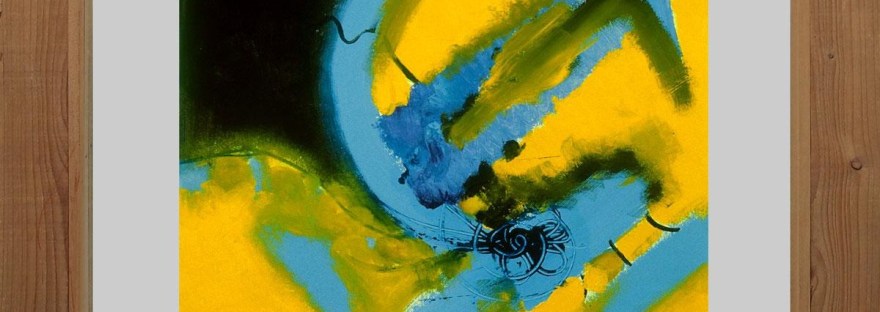
Featured image: ‘Aerial View’ 1996, acrylic on board

In 2000 I found a studio, housed within and named after an old Chocolate Factory, where the plan was to house 100 artists. It was a walk across the park from my flat and near to the allotment! I was creating my little natural world in London! I was the first artist in and my work became freer. I painted, sculpted, crafted, and made clothes, mostly from recycled materials.
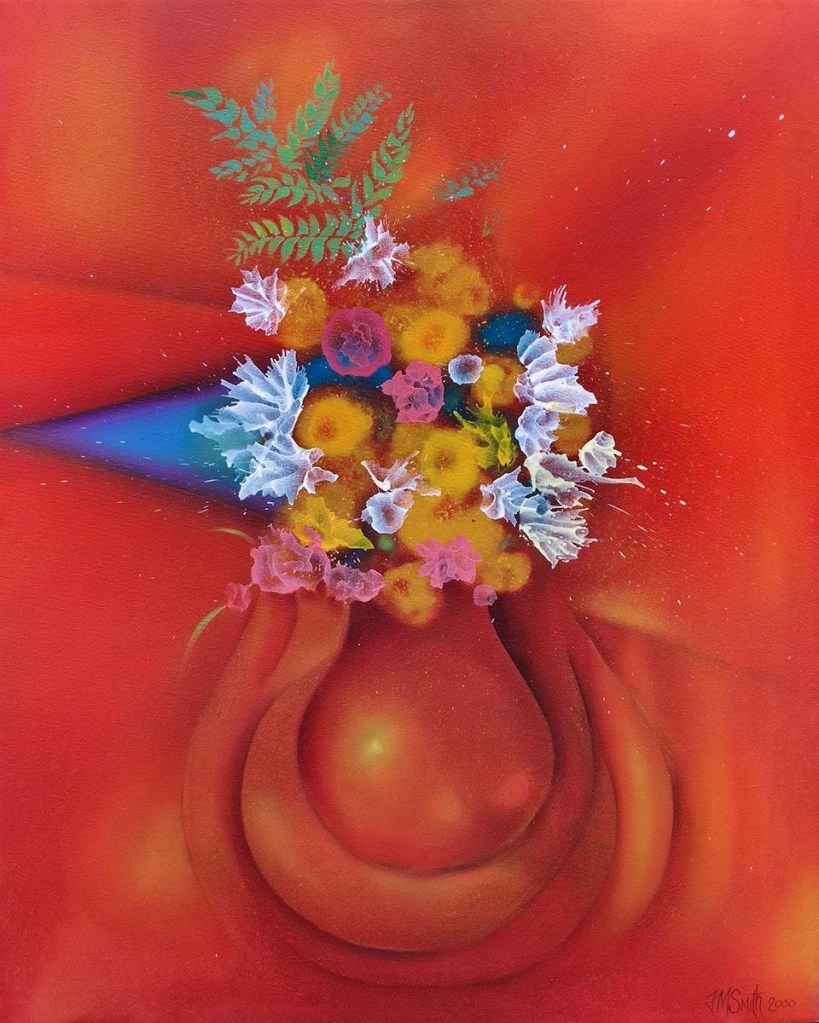
‘Red Still Life’ 2000, oil on canvas

I came across a leaflet for a residency at Dorland Mountain Arts colony in California, applied for it and was accepted. Somehow, I made the money to go and so I made drawings of an ambitious painting I wanted to do there. I tentatively bought a huge roll of canvas thinking that I could cut it down when I arrived if it was too big.

In March 2001 I arrived at Dorland and I was shown to where I would be staying for the next month. Wow! The Retreat was sensational. It sat nestled on a remote hillside with fabulous views all around. It was a massive building with a canvas roof and windows which showed the moon coming up at night. The wood burner was the only source of heating and I had never lit a fire in my life. I soon learned and became an expert.
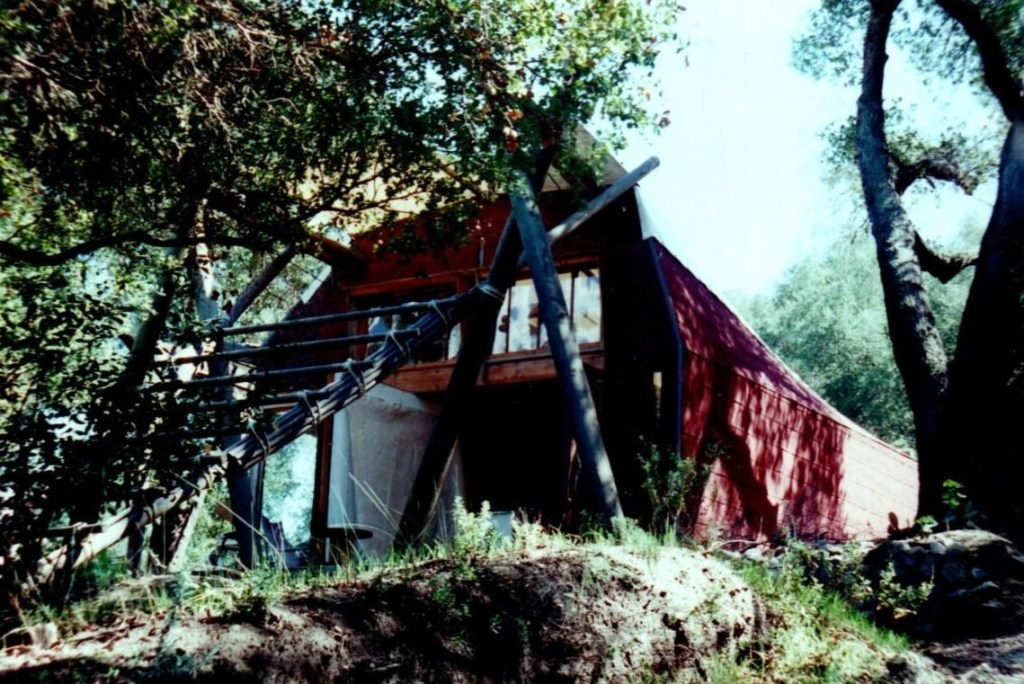

The Retreat

Robert, a permanent resident showed me inside the house and when he got back to the front door, he said “oh, and there is this…” He lifted a pole at the side of the front door and the whole front wooden wall opened out onto a concrete balcony. The amazing thing was, there was a massive drawing board attached to this wall and it was exactly the size of my canvas! Needless to say I didn’t cut it down and I spent the whole month painting outside.
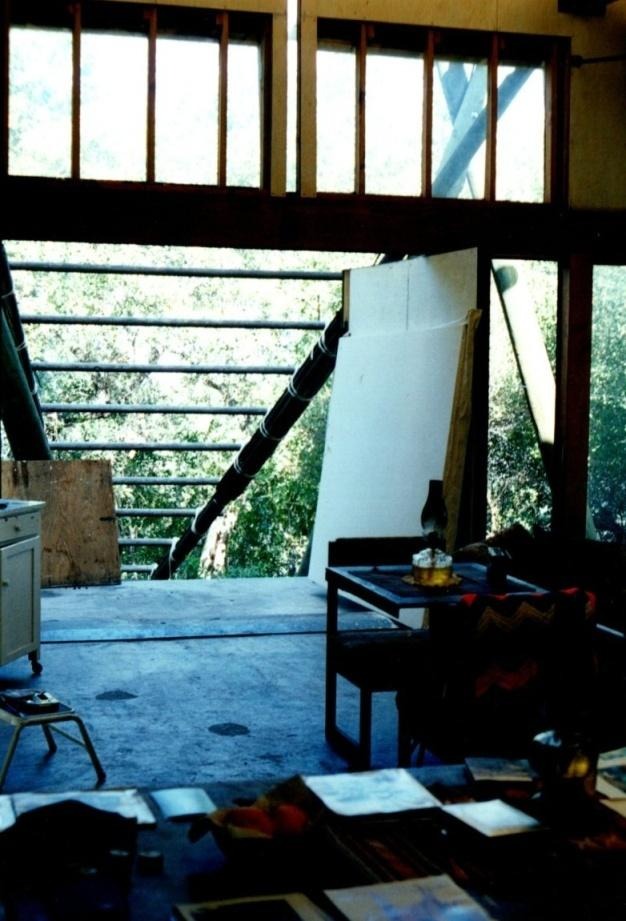
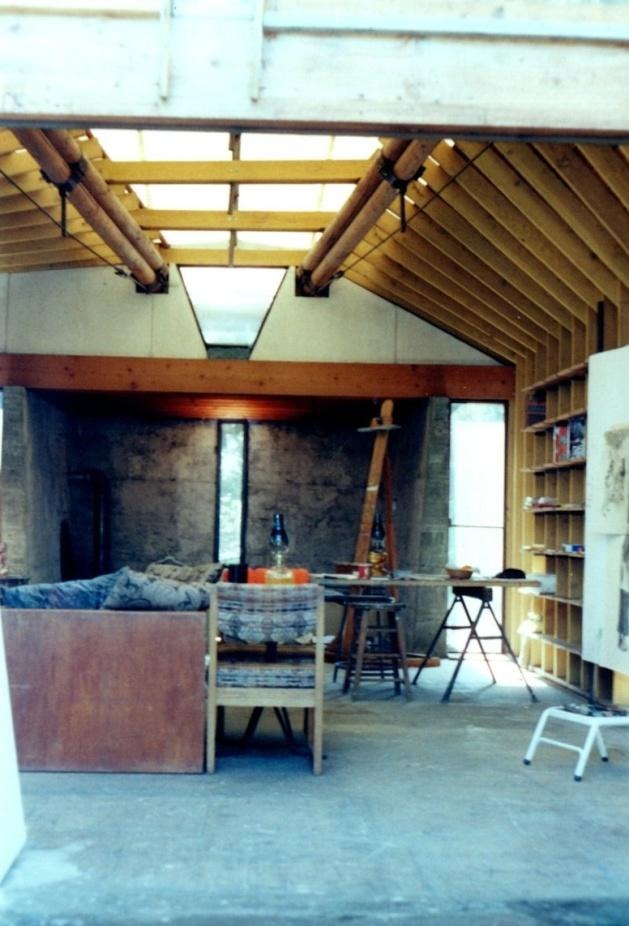
Front wall, living space, and communal dining room
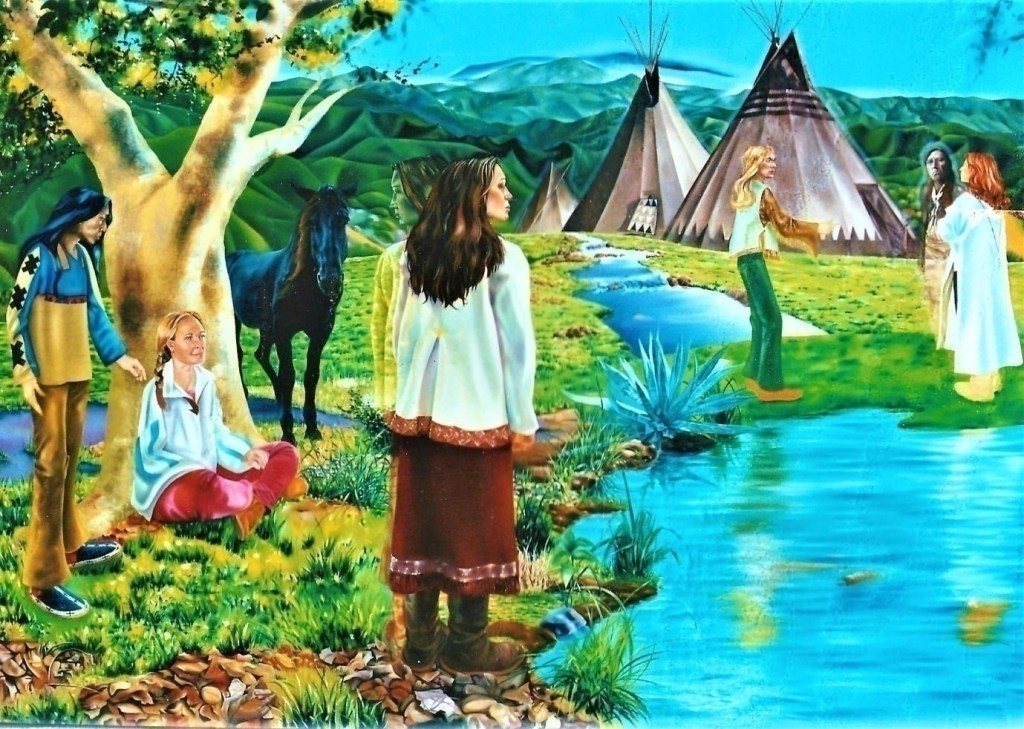
‘Past Life Present’ 2001, oil on canvas

My work had got bigger and bigger over the years, from tiny black and white graphics to this, a massive, colourful oil painting on canvas. It is about a vision I had of me and my relationships to people in a past life as Native Americans. The other people in the painting are from my present life.

I met a beautiful man called Ben at Dorland, who made amazing sculptures in wood. We hung out together throughout the month. I realised later in the month that I had fallen in love with him, but he had a girlfriend so I never told him. Keeping my feelings to myself was hard. When I left Dorland, I got onto the Greyhound bus and began to feel ill. I felt like I was having a heart attack. I was getting up to ask the driver to take me to a hospital when I instinctively pulled out a piece of paper and pencil and started writing. I wrote a 46-verse love poem about Ben on the bus and when I had finished, the pain in my heart had gone.

Dorland was an amazing break from my madness and gave me the motivation and energy for the beginning of a new life.
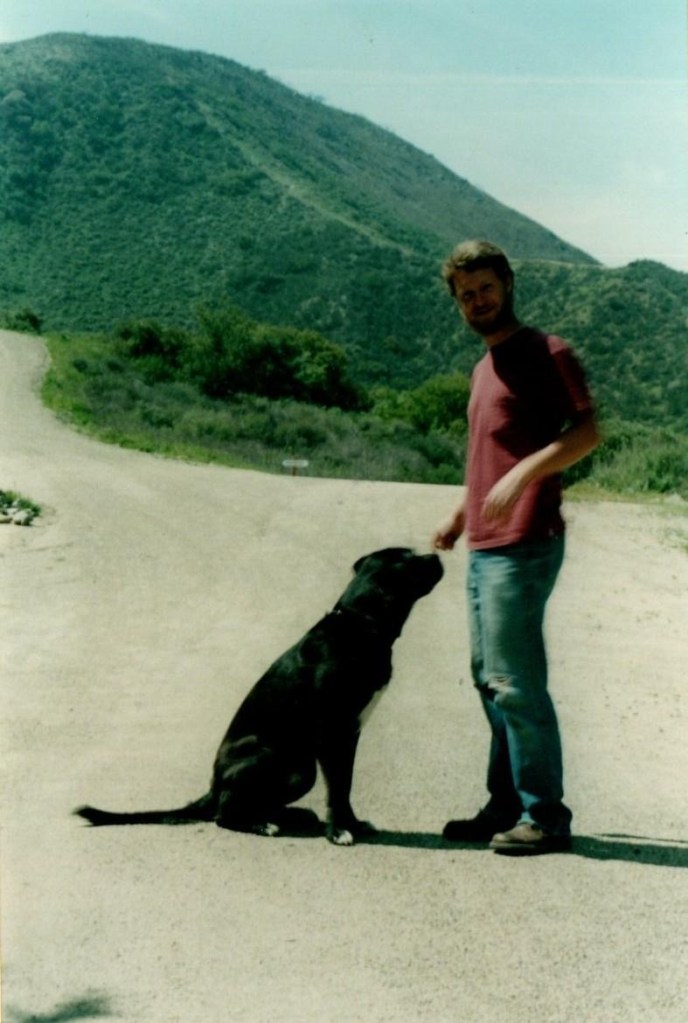
Ben
Ecology of the absurd, Featured blogs, sites & lit works, FLASH!, Popular & established authors, USA

Butterfly Farm

By Nina Hart: This story originally appeared in the book of short stories, Somewhere in a Town You Never Knew Existed Somewhere

It had been years since she’d been to the butterfly farm. She had to stop going because the butterflies were too beautiful. She would sit and weep as their soft wings skimmed overhead and grazed her tiny ears. Their grand wings veering wide in flight and showing her prints like African batik.
She didn’t like being the one who always cried, sitting on the bench and looking down and over to the side. She was trying to hide the tears that rolled out like curling butterfly tongues. The butterflies didn’t know she was crying for them. They were too busy landing on velvety flowers and sucking sweet liquids out of squeaky golden stems.
The last day she spent at the butterfly farm was the day she cried the most. She was sitting on a bench and she was talking to them. She told them they were “sweet and gentle” in a very loud voice, which surprised even her. Suddenly a slow-moving man wearing dirty beige cover-alls and holding a heavy glass jar began to walk toward her. He came and took her four favorite butterflies. She didn’t know how he knew. He stuffed them with his rough hands through the top of the jar and quickly screwed on the lid, their tiny wings wilting. Dogs barked and birds screeched and the sky turned grey with sadness. Some big bowl of hunger grew up in her and puffed her size up to the clouds. Swollen hands moving like giant wings. Her love was that big. She took the man’s bulbous arm and threw it behind his back and arrested him and took him back to the pork farm and the butterflies now sit on his shoulder and eat from dog bowls for all the rest of their days.
Collapse chats & diaries, DIARIES & MEMOIRS: COUNTRIES A-Z, Ecology of the absurd, Reflections

Dying Well Amidst Collapse (#1)

In 2040 I will be 60. In 2050 I will be 70. I am lucky enough that I am likely to remain relatively healthy throughout my middle age; I like to think that my old age will not start until I am 70. I have read enough now about the -more or less global- Collapse of modern civilization that is highly probable before 2050, and highly possible by 2040. This means that civilization is likely to become decrepit before I do, and I am likely, like the majority of humans alive after 2040, to suffer a tragic death (although I may not). How can I make my death less tragic? How can I die well? Firstly, I can resolve not to die in a state of blind ignorance about what is happening to the world, as unfortunately, many are doomed to do (I urge you to read about Collapse, particularly its thermodynamic and ecological bases). Secondly, I can resolve not to die in a state of blind panic. If I know my death may be tragic, the least I can do to prepare is contemplate the various possibilities of my death, as well as maintain a good meditation practice of letting go: letting go pain; letting go all distractions from the present moment. This is dying well amidst Collapse.

Originally published in the Schemattic digital garden.

Ecology of the absurd, Many feminisms

Cryptic episode

Two animals circled each other in love and hate. One of them was wild and one obsessively tame. The wild one started to see danger everywhere, fear and aggression artificially heightened when she became aware that her kind was threatened. The tame one encouraged her into a cage, but only, or so he thought, because it was a cage where she might rest and ingest calming substances and sentences in safety, so as not to explode her brain. Because the tame one had been so hurt by her exaggerated wildness, and he saw that the wild one had hurt herself too.

The tame one picked a tarot card, and it read, ‘La Force’ which gave him the strength to encourage the wild one to stay in the cage. A few days later he picked another card, ‘Roy de baton’ which helped him to adopt the role of a just and kind father, or so he thought. He spoke soothingly through the bars of the cage:

‘This will make you stronger, so that you may fight for the survival of your kind’ he told the wild one, his enemy and lover, and she understood, or so he thought. Secretly she used her restrained wildness to hatch a plan to undo her lover’s tameness. Ultimately, it was her wildness that was the stronger force in both of them.

Originally published in the Schemattic digital garden.

Ecology of the absurd, FLASH!, Popular & established authors, USA

Chipper Dale

By Nina Hart: This story originally appeared in the book of short stories, Somewhere in a Town You Never Knew Existed Somewhere

Charles Chipper Dale stood dressed in the full regalia of an eight-year-old on his front lawn in Xenia, Ohio. The air was hot, and black, and sweet. Charlie jumped nervously from one foot to the other, nostrils flaring like a hunting dog’s. “The tornado will hit without warning!” prophesized Chipper to his audience of six children, one dirty sparrow, and a beat-up red Tonka Truck. “We will all be dead, taken up into the wormlike mass, cold faces pressed against one another in the brutal raging wind!” The children all sighed and began to shake and cry. “I have to go home and get my Snoopy Roo-Roo.” cried Ellen, who looked like a ringing bell in her oversized green dress. “Well the clouds will suck you up like a milkshake into the sky if you do, Ellen! I forbid you to go anywhere, Ellen.” said Charlie. “Where are the parents? Where are the parents?” asked Jake Lacky, who had a wide chest just like his pot-smoking dad. “My teacher said I’m a latchkey kid. What’s a latchkey kid?” No one knew. In the distance the raw smell of rain drew closer. The children could taste the mist as it slipped on their lips like hard candy. They could feel a rumble in the earth under their hot tennis shoes. “What do we do, Charlie?” asked Rainbow, one of Jake Lacky’s three siblings, latchkey kid and daughter of the pot smoker. “Look to the wind.” said Charles Chipper Dale, fingers twitching, eyes veering off into the far distance. “It’s here, it’s coming, and it won’t be long. We won’t wait for the sirens to go off. We’re children. We can feel things. Let’s head on down to the root cellar, one at a time. Single file.” “I love you all so much,” whispered Rainbow, as she held her brother Jake’s hand and followed him down the stone staircase. Cars and their drivers drove past the children on the street. Faces and heads and necks propelled forward on their way back to work after lunch break. All of them ignoring the twisting sky in the distance and the staunch smell of darkness. The tornado would hit without warning. The latchkey kids would be safe in Charlie Dale’s root cellar, listening to the roaring sounds of the King of Winds. All of them holding hands and Rainbow mouthing I love you I love you and I love you all into the dark green landscape.