Blog

COTW journey & strategy

Versy Talks—Centre of the Web sponsored debate: Did the internet really democratize publishing?

Introduction

Centre of the Web (COTW), a new alternative online literary platform, is thrilled to announce a booster event in collaboration with Versy Talks, a complete online debating platform, with community participation, professional debate coaching and tons of debate drills

This debate is titled Did the internet really democratize publishing? It started on 21st May and will finish on 31st May, and Versy is generously sponsoring the debate, offering a $25 prize, divided between 5 debaters with the most votes on their arguments. You can take part for free. 

COTW enthusiastically encourages all its contributing writers, subscribers and readers to take part in the debate during the debate period. This will help with COTW`s mission to contribute to a global revitalization of human literature during this crisis-ridden but epic period of human history, encouraging diverse and underrepresented voices from around the world to share their thoughts and stories all in one place, on a dynamic and globally interconnected platform. This aligns with the purpose of Versy Talks to promote structured debates and insightful discussions, where debaters can explore their commonalities and points of difference, to contribute to a more harmonious online culture.

More on the debate

It has been argued that the internet has democratized publishing so that these days, almost anyone in the world has the opportunity to get heard and read. However, inequalities remain, including who really makes it as a writer, who is widely read, and who is really likely to be picked up by the big publishers. In the sponsored Versy debate we ask: Did the internet really democratize publishing?! We invite debaters to consider how far the internet-led democratization of publishing is an illusion, and how far the same old inequalities that existed in the traditional print publishing of the 20th Century, still exist now. Also, how much is the best or most interesting writing published, compared with what sells, and do authors who are already well-connected still have a massive advantage, as well as those who have internet publishing skills? (Not everyone understands how to manage a blog, for example). All printed media and publishing should be considered within this debate, from newspapers, through blogs, to e-books and physical books and everything else.

COTW call for submissions

COTW would also like to announce that they are actively looking for written contributions from around the world. We currently only publish in English, but eventually we intend to publish in several languages. Contributors are welcome to submit writing in their native language, where we can negotiate translation using AI tools. This is not yet a paying market, but it is a chance for you to get your voice heard, and to receive free editing advice. The bigger you can help COTW grow, the quicker we can get to the point where we can start paying contributors! Flash fiction is encouraged, as are diary pieces, giving insights into the daily lives of diverse human beings, especially (but not necessarily) those living in difficult conditions or going through interesting times. Other types of creative writing are also encouraged, but please note: we are not accepting poetry at this time. Short essays, articles, blog-style posts, journalistic pieces and arts reviews will also be considered. For more ideas, please browse the different post categories by navigating from the WRITING tab in the menu at the top of the COTW frontpage. All submissions should be sent to the editors at the email address: epictomorrows@gmail.com Thanks!

Ecology of the absurd, Featured blogs, sites & lit works, Popular authors

The Fate of the World: The History & Future of the Climate Crisis by Bill McGuire

The Fate of the World: The History & Future of the Climate Crisis by Bill McGuire, was released today on 21st May 2026. Bill McGuire is a volcanologist, climate scientist, activist, keynote speaker and writer of popular science and speculative fiction.

*******

Bill is Professor Emeritus of Geophysical & Climate Hazards at UCL, a Co-director of the New Weather Institute, a Patron of Scientists for Global Responsibility, and Special Scientific Advisor to WordForest.Org. Bill has a personal connection with the founding editor of Centre of the Web, Matthew Azuley: Bill kindly wrote the introduction, for free, for the anthology Climate Collapse? -Calls to Action from Around the World, compiled and edited by Matthew Azuley and published by Arkbound.

Matthew is delighted about the release of Bills new book, although perhaps delighted is not quite the right word to use, in the context of unfolding climate collapse. Matthew remembers how impressed he was with Bills very accessible introduction text for Climate Collapse? Bill is a great science communicator, and he puts to shame other climate science communicators. Below is an example, an extract from the introduction to Climate Collapse?

We are in deep, deep sh*t. It’s what I told a BBC journalist interviewing me in 2021 about our failing climate, and nothing has happened since to alter my view. Indeed, things have gotten considerably worse. Whether we accept it or not, our climate is already broken to such a degree that it will have a colossal impact upon every aspect of our lives, the lives of our children and their children, and the lives of those to come, not just for years, but for millennia. 2023 and 2024 were the hottest on record, and quite probably saw the highest temperatures since the warmth of the last interglacial period, 125,000 years or so ago. Already supercharged weather has become even more monstrous, exemplified by catastrophic flooding in Spain and apocalyptic wildfires in southern California. Prospects are bleak, to say the least, but before delving more deeply into the future of our overheating world, let’s begin with the current state of play...

Buy Bills new book here.

FLASH!

Marabella, Hot and Cold

By Dan Nawaz

Chauncy Clemens was leaping through the bonfire when his dress went up. We were untouchable ‘til then. 

We, the Marabella Sarcophagi, danced and took bolt filtre in the ash-fed southern forest every week. Most of us were the children of second generation Pelivosi —so there was never a shortage of cash for our elaborate homemade robes, or for our filtre and booze, and I never felt guilty about taking it. 

As Chauncy burned nobody was screaming. We were grieving the end of a lovely time alone, ending before our eyes. He was ever strange to me. Stubborn —could never take no for an answer, that boy, and in truth I was glad of him going even as I watched in that moment. 

Bolt filtre made you optimistic though. Like fire blossoming inside you. So when I started hacking him apart the rest became relieved, even enthusiastic to join in. We took parts of Chauncy home and hid him in our bedrooms away from adult eyes. Others —who knows who— fed him to the dog and buried him in the park and ate him and pickled him and asked him what it was like being dead and being everywhere at once. He was only ever taken to the reaches of ourselves, barely out of school mostly, but knowing he had made it out of reach to some secret place beyond sight, many of them began to nurture a sickly envy for the dead boy. I knew it from their look, coming back to the forest parties. From their hushed conversation and red eyed stare.  

I learned some weeks later that some of the Sarcophagi had begun bringing their scraps of Chauncy to the dances. I caught Annie Gorbale talking into her hands and yanked her to the treeline. 

“Fuck’re you doing Annie?”

“Doing nothing.”

I slapped her curd of a cheek and she dropped him, a blackened thing like tree bark. 

“He said he wants to dance.”

“Quit your nonsense, you’re scaring the new kids.” 

“But it’s you he wants to dance with,” Annie said with her wet eyes and her butterfly gown, and picked up the charred lump I saw was wrapped in dark, stained gingham like a bridal favour. The air was thick and I felt behind me the dance had slowed. I felt bodies breathing at my back, a whole crowd swaying together. Their presence thrummed as a group of many but more keenly as a single glaring and grave-sour scorn. They felt hot. Smelled like him too, like sour chocolate milk. Not my Sarcophagi anymore. Chauncy’s.

So, we danced. And when Chauncy wanted to kiss we kissed, and I tasted him distilled. And after, when I could breathe again and I was allowed to be scared properly I found myself carrying him still, even in my room, still kissing him when we were alone like he’d always wanted of me.

And it was like playing. Guessing how I might die each time, and when I guessed right at last, just laughing. It was the funniest thing. Laughing together because even Chauncy, even now, he didn’t know himself how it all happened or whatever was coming next. 

Outside the streets were dark and cold but dinner was waiting downstairs.

Collapse chats & diaries, Ecology of the absurd, Reflections

Learning To Live Slowly

By Robin Boardman, co-founder of the global Extinction Rebellion (XR) movement; originally published on April 7 2026 on Robin’s website here. Republished with his permission.

This week, I let go of the last small thread of work I’d been holding onto with Revolution in the 21st Century. A few hours here and there — just enough to feel like I was still the person I used to be. Still contributing. Still part of something I’d spent years building.

But my brain has shut down to that kind of work now. So I wrote a gentle goodbye email to the team, and a farewell on social media. I’m hoping that by shrinking my world — and my worries — I might give my body the space it needs to recover.

Now I’m lying down with a migraine, dictating these thoughts into my phone. Speaking, in a strange way, both into the void and into the world’s largest language machine.

Chronic illness takes things from you slowly, and then sometimes all at once. Work — that identity of doing and producing — was one of the last things I was still quietly clutching. Letting it go feels significant. Not just practical, but existential.

Who am I, if not someone who does? What do I do when I see climate collapse unfolding across our gorgeous blue-green earth, yet live bound by these four walls?

I’m still working that out. My values are the same. My love and motivation undimmed. Yet physically, I can give a lot less. So meaning has gotten smaller. More specific.

I’ve started sewing again — patches, small art projects, techniques I haven’t touched since school. I bake for my housemates and neighbours. I keep the common spaces clean because I’ve noticed how much it changes the feeling of coming home to something cared for.

It’s not the life I imagined for my twenties. It looks, in some ways, closer to that of a retiree. But there’s an honest craft in it. A kind of housebound purposefulness — stripped of the stereotype associations of age or gender. Just a person who happens to be home a lot, trying to make that mean something for the people around them.

I hold it lightly. Some days it feels like a silver lining. Other days, it just feels like what’s left.


The hardest part, most days, isn’t the physical limitation. It’s the relational cost.

Illness makes you unpredictable. Unavailable. Hard to reach.

People you love have their own rhythms — their own crises, their own windows of openness. And when your body doesn’t run on a schedule, you miss each other. You fall out of sync.

So you find other ways.

Letters. Voice notes. Small things made with care. Slower, more asynchronous forms of love.

It’s an adjustment. And it’s ongoing.

Not everyone understands. Some are drifting away. That’s okay. I’m taking it one day at a time.


I’m still doing EMDR therapy. Still trying to bring my nervous system somewhere closer to rest — films, audiobooks, sitting in the garden, whatever works on a given day. Still watching for those small windows of recovery, and trying not to measure my life only by their absence.

Six years in, I’m not the person I was before.

But I’m still here. Still finding small ways to nourish the life I actually have. Still trying to keep despair at a distance with purpose, however quiet.

That feels like enough, for now.

Ecology of the absurd, DIARIES & MEMOIRS: COUNTRIES A-Z, England

Building Silent Haven: Chapter Two

Featured image: ‘Lunchtime Concerts’ 1979; Pencil and collage on paper (College project)

When I left college in 1981, I was offered a council flat on the eighth floor of a tower block in Wood Green, London, so I took it. I had to go through seven doors and a lift to get out, but I didn’t think about it then, I was living in a totally ungrounded, drug-filled fantasy world, and so being in the air suited me. I imagined it as my high-rise apartment in New York. The famous artist. This is who I believed I wanted to become.  But I was extremely self-critical, not even knowing I was being so hard on myself. It had been a normal part of my childhood. This and my lack of confidence kept me in a cycle of wanting to block this harshness out.

After 3 years at college, I had had enough of Graphics and began doing freelance illustration. I did commissions for The Magic Circle, BBC, Channel 4, The Fiction Magazine, Spare Rib, World Wildlife Fund, Live Aid and various publishers.  My work was small, black and white in ink or pencil, and it was detailed. 

Gemini. A commission for ‘The Complete Astrologer’ by Derek and Julia Parker. 1981

I also explored my own realistic and abstract artwork and crafts, sculpture, clothes design, generally with a nature or recycling theme. Artwork was my healing journey from a childhood bereft of emotional comfort.

Embroidery eagles for a shirt collar. 1981

My work got bigger and bigger in size as my confidence grew.

‘Blue Grass’ 1981 pencil and watercolour on paper.


In 1982, when I was 23 I had a motorbike accident and broke my leg in three places. The woman I was living with, Yvette was on the back and thankfully only bruised her knee. It was a complex fracture and they couldn’t operate immediately as I had friction burns on my leg. I found myself in traction, (they put a pin through the ankle and dangle a weight from it to pull apart the bones so they can realign them. Sounds like torture and it was!). Obviously some nurses and doctors were considerate but my experience of doctors standing at the end of my bed with their white coats on and clipboards talking about my condition without including me, stuck with me. Also asking a nurse for a bedpan and being told it wasn’t time for the bedpan round and I must wait. These were just two examples of emotionally unsafe behaviours that stayed with me for a long time. It was frightening. 

 ‘The Resting Biker’ 1982 oil on paper

Yvette came to visit me every day and when I came out of hospital I vowed I would never see a doctor again as I had felt so out of control. It was another pivotal moment where I began unconsciously building my need for complete autonomy and to find a healing space. The accident completely woke me up. I wanted a more spiritual life and I started to explore complementary medicine, diet and fasting to improve my physical health. 

I met Simo and Checca, the Italian twins at the women’s bathing pond at Hampstead Heath. Yvette moved out and they came to live with me. They had been brought up in rural Italy and moved to London when they were 11. They had gone to school at the famous Summerhill and were very open minded. They were outgoing sannyasins, disciples of Osho, an Indian Guru and I loved living with them. Through Osho, I learned about meditation, mysticism and spirituality. It was comforting and life affirming. Seeing life through the perspective of spirituality created a positive outlook. I also found a book called “You can heal your life” by Louise Hay and read it over and over. Its basic principle is “you are in control of your mind; it is not in control of you” and she provides exercises to let go of past painful conditioning and find that empowering place of being in control. She is also the queen of positive affirmations. 

Simo, Checca and I visited Italy for months and I loved it there. They both also knew about wholefoods and introduced me to cooking brown rice.

In 1987, when I was 28, I was having a conversation with my friend Roger and someone I had just met. This person asked me what I did for a living. I avoided the question and mumbled something about crafts. Roger said ‘she’s an artist!’ That was the first time I began to give myself that title.

That same year, Checca and I went to live in Italy. This created the real foundation for my connection with nature. My first activity was to collect figs from a tree and eat them, I loved it and it made complete sense to me. We collected and cracked pine nuts on a stone and made pesto with fresh basil. We stayed with Checca’s dad for a while. He was an accomplished artist. He foraged, including mushrooms.

‘Antonio’s Garden’ 1990 ink on paper.(Checca’s dad’s house)

After almost a year with Checca’s dad and also staying at our friend Roberto’s house, we found a house to live in at the edge of a quiet village in the countryside. I meditated, (working on my inner demons of depression) and got a job working for Walt Disney drawing cartoons of Donald Duck for ‘Paperino Mese’. I would work at home during the week and go to Milan on Saturdays to the Walt Disney Studio to have my work assessed.

My drawings for ‘Paperino Mese’ 1991

In 1990, when I was 31, I came back to the flat in London which had been kept on by Simo. Checca stayed in Italy, Simo moved out of the flat and I lived there on my own. 

As I was healing, the eighth floor of a noisy tower block next to a main road with noisy neighbours all round me and no sound insulation, became a place of deep suffering. I could even hear my neighbour Tracey downstairs sweeping the floor. The sound of Tracey’s bass-heavy music in the night for two years and environmental health being unable to catch her brought me to a nervous breakdown, a catharsis, in 1998 and I was sent to a psychiatric hospital for a week. I then spent further spells in crisis centres and took anti-depressants until one day during a massage at the crisis centre, I broke down and exclaimed to the masseuse, “I’ve lost my soul”. I stopped the anti-depressants immediately.

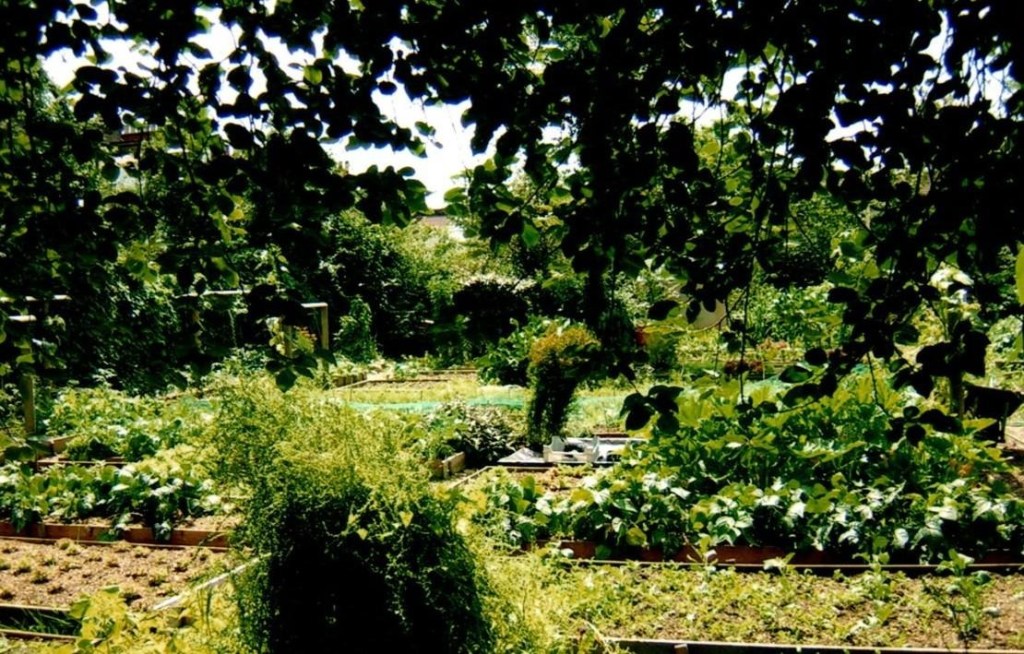
The outer issue was always noise. The noise that humans create which, to me, made the sounds of nature harder and harder to hear. I longed for silence and the only sounds being the sounds of nature, I was obsessed with it. I felt breathless without it. I told a carer in the crisis centre that I longed to hear the sound of the birds and she said “well, we’ve got a birdsong tape!” I could have screamed; she didn’t get it. I wanted to be so immersed in nature that there was no separation. Birdsong on a tape was just another human invention and all part of my disconnected environmental crisis. I wanted the real thing, but I was on the dole, DHSS (Department of Health and Social Security) feeling ashamed and guilty. My friend Prabhu helped when he said, ‘Don’t feel guilty, it’s DHSS—Divine Help for Spiritual Seekers!`. I was living on £50 a week, no money in the bank and living, ‘existing’ in a noisy tower block in London. Sometimes I sat on my balcony at the flat with my hands over my ears, rocking from the insanity of the noise; traffic, household noises from uninsulated flats, police sirens, fire engines…and nature seemingly so far away out of my reach. My solace was to walk through Alexandra Palace park to Crouch End to buy my shopping from the health food store. Alexandra Palace was a walk across a little park next to my allotment and over the railway bridge. I also started to see counsellors and this gave me a feeling of strength and security. However, I couldn’t get out of the flat. No-one wanted to home swap to a tower block, I was trapped.

 ‘A Fine Line’ 1998 oil on canvas

I was continuously burdened with the thoughts of how to raise enough money as an artist to get a mortgage and buy my own place. It was a crazy idea, I was an Artist! Money was an alien concept, and consistently making money without feeling utterly stressed was even more alien. I had been on and off the dole for years, coming off to do a few months of freelance work and then signing back on again. I couldn’t cope with the pressure of relentless work; it sucked the joy and the purpose out of making art. Thinking only of the conventional route clearly wasn’t for me, but what was the solution?

I spent the next few years going in and out of the crisis centre, figuring out in my mind, what I wanted. On one visit, I met a man who did photography. He showed me one of his pictures. It was a barge going through a tunnel and there was a small bright light at the end. It made me ask, “What is my light at the end of the tunnel?” and my first thought was “America”! So I made that a goal. Unbeknownst to me at the time, my trip to America was to be another foundation for my deep inner craving for a more natural life.

Reflections

Capitalism is…

…the weed with roots 6 feet deep, that looks so attractive on the surface, but eventually blocks out the sun, as well as the neighbours. The most wholesome apple pie you have ever tasted, with pharmaceutical ingredients. The sexiest person you have ever seen, naked, that turns out to be a hologram when you get too close. Poorly designed obsolescence. The spiritual shopping mall open late on Sundays. The thousands of dollars and thousands of hours of exhausting moderate pain you are expected to suffer before your insides can be fixed, or if you live in a poor country, the thousands of dollars you yearn after but will never have, and the worsening pain you will suffer because of it, until you die. The millions of air miles spent on observing rare flowers, which therefore become rarer. The illusion of YouTube greatness. The fact that you cannot remember the important things and cannot forget the trash. The way we, of whichever gender, find some kind of cool way of subverting the patriarchy, only to be commercialized to support the patriarchy. The fact that most people still perceive anarchism as about chaos and throwing bombs, though it has been over one hundred years since the 1890s. That the internet did not truly democratize publishing, despite appearances. The seemingly infinite ways we could get rich if only we learnt the right strategy (on YouTube) and learnt the right way of obfuscating the existence of suicidal sweatshops. The way that companies are trying really hard to audit their supply chains, so that they can begin to work out which parts of those chains are too immoral to be effectively spun on Netflix. The way you think she / he / they looked at you, when actually, your wallet / purse or those of your parents, are always the prime concern, whether consciously or not. The fact that things are pretty good, for most of the time, for enough of the people who are supposed to matter and the people who validate those people by wanting to matter in exactly the same way.