DIARIES & MEMOIRS: COUNTRIES A-Z, South Korea

Do Not Be Ill, If Spring Must Come After All (아프지 마라, 기어이 올 봄이라면)

By Pak Jong-hee

A gentle breeze brushes past, carrying a scent that feels like an old memory. This pungent, slightly fishy aroma that fills my nostrils is the breath of mugwort, rising in clusters as it leans against the spring sunlight. In a corner of the park, on a sun-drenched mound, I see a woman crouched low, picking mugwort. Each time a tender shoot—hardly larger than a baby’s fingertip —is placed in her basket, a warmth like the earth’s own body temperature quietly spreads to my feet.

The woman speaks to me in an excited voice, saying the sky is flawlessly clear today. Looking up, I see that the hue of the sky is indeed different from before. Where the achromatic winter has retreated, has the delicate texture of the pale green grass ever been this vivid? Yet, the brighter the world becomes, the more Spring has always been a precarious guest to me. It is as if I can hear the moans of living things breaking through the stubborn ice of winter.

Spring never arrives for free. The backs of the new shoots tearing through the frozen earth are hunched, and the gestures of the trees squeezing out every drop of their essence to bloom are nothing short of desperate. Whenever I see petals trembling under the lash of a late-frost gale, my heart grows anxious, thinking that such brilliance might actually be a final, frantic struggle bartered for death.

This sense of peril stems from the duality of Spring. On the surface, a hymn of vitality seems to resound, but beneath it, withered grasses and ancient trees—baring their gaunt skeletons—lie scattered like the wreckage of winter. Upon that threshold where warmth and cold intersect, fragile lives cross the boundary between life and death several times a day. To me, Spring has always been a season of pity. Like the late-winter cold that strikes just when you think you’ve arrived, it resembles the seasons of trial that visited me without warning at every turning point in my life.

Spring was just beginning to show its face even at the place where my mother left this world. Perhaps because the void of loss was so deep, I suffered from a severe, aching malaise every Spring. Living with a dry cough throughout the winter, I could only manage to stand up again when the cherry blossoms burst into pink buds, as if tearing their own bodies open. To me, Spring was not a season of vitality but a cold current that I had to swim against with my whole body, year after year.

Looking back, my childhood was also a succession of chilly Springs where I couldn’t even take a single clean breath. Time spent in a village beside a cement factory. Every morning when we opened the door, a thick layer of dust, white as snow, had settled in the yard. The lids of the clay jars, polished to a shine by my mother’s hands, would soon hold their breath under a shroud of gray powder, which would harden like stone after a few days.

Dusting off the particles that settled on each other’s hair was our family’s simplest and warmest kindness in those days. Yet, the fine powder that seeped through that kindness was quietly taking root deep within my mother’s lungs. As a child, I did not know. I did not realize that those hours spent living beneath the factory chimneys were gnawing away at my mother’s breath.

The dry cough that began in her forties became chronic, eventually pinning her to a hospital bed under the name ‘pulmonary edema.’ By the time the environmental lawsuits began, Mother had already passed away. All that remained for me was a Spring illness that resembled her cough and a single scar in my heart that flared up every change of season.

I quietly watch the fingertips of the woman picking mugwort. I try to imagine how long those tender shoots must have endured before pushing up through the hard earth. The vitality of mugwort, erupting through frozen ground, is by no means docile. It is a force of struggle, ultimately heaving the very crust of the earth upward. Like the mugwort that perfects its fragrance even while swaying in the biting wind, perhaps our lives only gain a subtle radiance after passing through the tunnels of ordeal.

The woman suddenly holds out a bag of mugwort toward me as I stand still. With a soft smile, she tells me that if I boil a bowl of soup with some soybean paste, it will be better than any medicine. That smile is as gentle yet sturdy as the pale green shoots that rose after steadfastly enduring all manner of cold.

Returning home with the bag, I fill the kitchen sink with water. As I wash the mugwort several times, bits of dirt and dried leaves float up, and the clear water soon turns a faint green. Dissolving soybean paste in a pot and adding a handful of mugwort, a pungent aroma slowly rises amidst the savory scent. The moment a spoonful of soup enters my mouth, a bitter yet sweet taste lingers on the tip of my tongue.

A sense I had long forgotten awakens. Amidst the rising steam, the memory of sitting on the edge of the wooden porch as a child, blowing on the mugwort soup my mother had boiled for me, comes vividly back to life. Back then, not knowing what this fragrance had endured to rise, I probably just rejoiced that spring had come.

Silently, I set down my spoon and wrap both hands around the bowl where the warmth remains. Then, I step outside again. The wind brushing against my skin is still spicy and cold. But now I know. One must endure this precarious wind for flowers to bloom, and only after passing through this cold does the mugwort truly complete its fragrance.

I lower my mask for a moment and breathe in the air deeply. Leaning my heart into the pungent breath of Spring that seeps deep into my lungs, I whisper softly:

“Do not be ill. If spring must come after all, shouldn’t you cross this season safely?”

If I am still in pain, then this radiant Spring is ultimately nothing more than a season of pain. Today, the green shoots swaying in the breeze appear exceptionally clear. Each of those pale green textures is swaying quietly, yet firmly, as if remembering the freezing seasons they have passed through. Standing before that vitality, I reverently inhale all the pain and endurance dwelling within this fragrance of Spring and this breath of green.
DIARIES & MEMOIRS: COUNTRIES A-Z, England, Exclusive to COTW

How to ruin a man’s orgasm

By Eric Black

The physical techniques are well-known. There is a whole weird subculture online devoted to them. But I refer to the psychological and societal techniques. First, the man should be born into a liberal Western family, which retains just enough unconscious traditional expectation of high male performance as to confuse the young male mind, growing, as it would be, in a free-thinking family which claimed to be indifferent to gender roles. Second, the man should grow to be bisexual, but not to be too comfortable in his bisexuality. Third, his parents should divorce at a young age, with the father leaving the family and maintaining only brief fortnightly contact. Fourth, the man, as a teenager, should over-use alcohol, cannabis, and porn, should go to the wrong university, should leave early and not get a degree, should enter into homo-erotic friendships where neither side admitted the homo-eroticism and where the other guy would dominate the friendship, making it difficult for the man to socialize in a wide and balanced way; and should break up with his first girlfriend, painfully, after a couple of years. Fifth, the man should develop serious mental health problems in his early 20s, feeling like a failure, should make friends with people who later killed themselves, and should have all his prospects for making a living destroyed by peer pressure, the expectations of the university-uneducated and a persistent nagging low self-esteem. Sixth, the man should go through his 2os with no sexual contact with anyone, forcing his sexuality to become auto-erotic, exhausting his orgasms to the point of no return, almost breaking them. Seventh, the man should finally find a long-term partner, but whom he is ultimately not suited to and does not have regular sex with, ending in a protracted and tortuous break-up.

And yet, all this may not be quite enough to totally ruin a mans orgasm, because the man may marry a kind and understanding person, of whatever gender, who may help him to explore his sexuality, who may help him to recover his hardness, as well as his softness, who may support his critique of this abusive society, who may stay with him till the end.

Collapse chats & diaries, Ecology of the absurd, Reflections

Learning To Live Slowly

By Robin Boardman, co-founder of the global Extinction Rebellion (XR) movement; originally published on April 7 2026 on Robin’s website here. Republished with his permission.

This week, I let go of the last small thread of work I’d been holding onto with Revolution in the 21st Century. A few hours here and there — just enough to feel like I was still the person I used to be. Still contributing. Still part of something I’d spent years building.

But my brain has shut down to that kind of work now. So I wrote a gentle goodbye email to the team, and a farewell on social media. I’m hoping that by shrinking my world — and my worries — I might give my body the space it needs to recover.

Now I’m lying down with a migraine, dictating these thoughts into my phone. Speaking, in a strange way, both into the void and into the world’s largest language machine.

Chronic illness takes things from you slowly, and then sometimes all at once. Work — that identity of doing and producing — was one of the last things I was still quietly clutching. Letting it go feels significant. Not just practical, but existential.

Who am I, if not someone who does? What do I do when I see climate collapse unfolding across our gorgeous blue-green earth, yet live bound by these four walls?

I’m still working that out. My values are the same. My love and motivation undimmed. Yet physically, I can give a lot less. So meaning has gotten smaller. More specific.

I’ve started sewing again — patches, small art projects, techniques I haven’t touched since school. I bake for my housemates and neighbours. I keep the common spaces clean because I’ve noticed how much it changes the feeling of coming home to something cared for.

It’s not the life I imagined for my twenties. It looks, in some ways, closer to that of a retiree. But there’s an honest craft in it. A kind of housebound purposefulness — stripped of the stereotype associations of age or gender. Just a person who happens to be home a lot, trying to make that mean something for the people around them.

I hold it lightly. Some days it feels like a silver lining. Other days, it just feels like what’s left.


The hardest part, most days, isn’t the physical limitation. It’s the relational cost.

Illness makes you unpredictable. Unavailable. Hard to reach.

People you love have their own rhythms — their own crises, their own windows of openness. And when your body doesn’t run on a schedule, you miss each other. You fall out of sync.

So you find other ways.

Letters. Voice notes. Small things made with care. Slower, more asynchronous forms of love.

It’s an adjustment. And it’s ongoing.

Not everyone understands. Some are drifting away. That’s okay. I’m taking it one day at a time.


I’m still doing EMDR therapy. Still trying to bring my nervous system somewhere closer to rest — films, audiobooks, sitting in the garden, whatever works on a given day. Still watching for those small windows of recovery, and trying not to measure my life only by their absence.

Six years in, I’m not the person I was before.

But I’m still here. Still finding small ways to nourish the life I actually have. Still trying to keep despair at a distance with purpose, however quiet.

That feels like enough, for now.

DIARIES & MEMOIRS: COUNTRIES A-Z, Ecology of the absurd, England, Exclusive to COTW

Building Silent Haven: Chapter Two

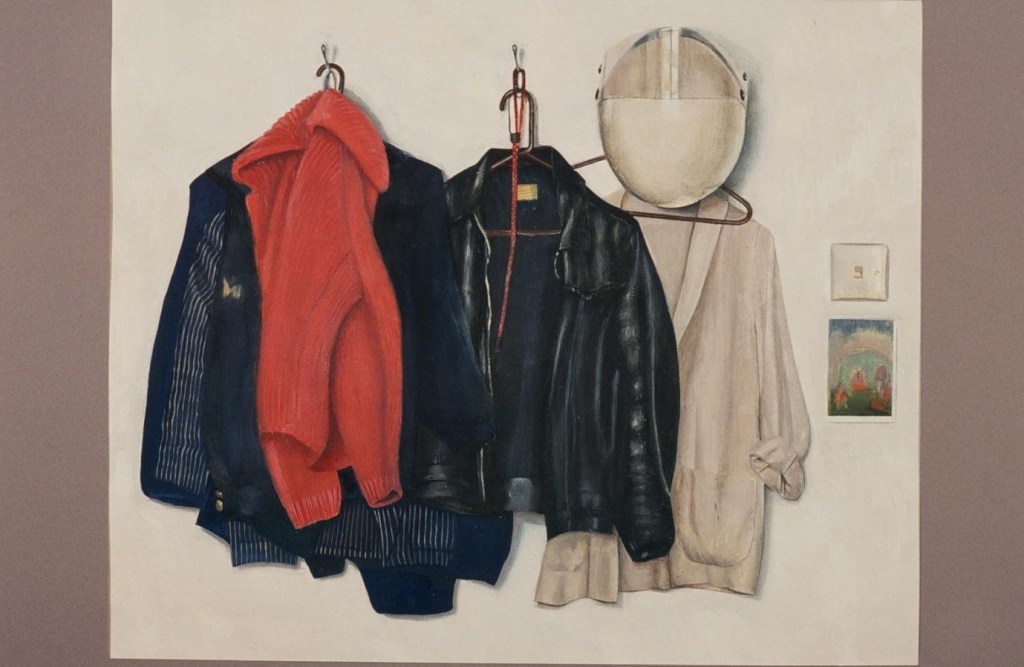
Featured image: ‘Lunchtime Concerts’ 1979; Pencil and collage on paper (College project)

When I left college in 1981, I was offered a council flat on the eighth floor of a tower block in Wood Green, London, so I took it. I had to go through seven doors and a lift to get out, but I didn’t think about it then, I was living in a totally ungrounded, drug-filled fantasy world, and so being in the air suited me. I imagined it as my high-rise apartment in New York. The famous artist. This is who I believed I wanted to become.  But I was extremely self-critical, not even knowing I was being so hard on myself. It had been a normal part of my childhood. This and my lack of confidence kept me in a cycle of wanting to block this harshness out.

After 3 years at college, I had had enough of Graphics and began doing freelance illustration. I did commissions for The Magic Circle, BBC, Channel 4, The Fiction Magazine, Spare Rib, World Wildlife Fund, Live Aid and various publishers.  My work was small, black and white in ink or pencil, and it was detailed. 

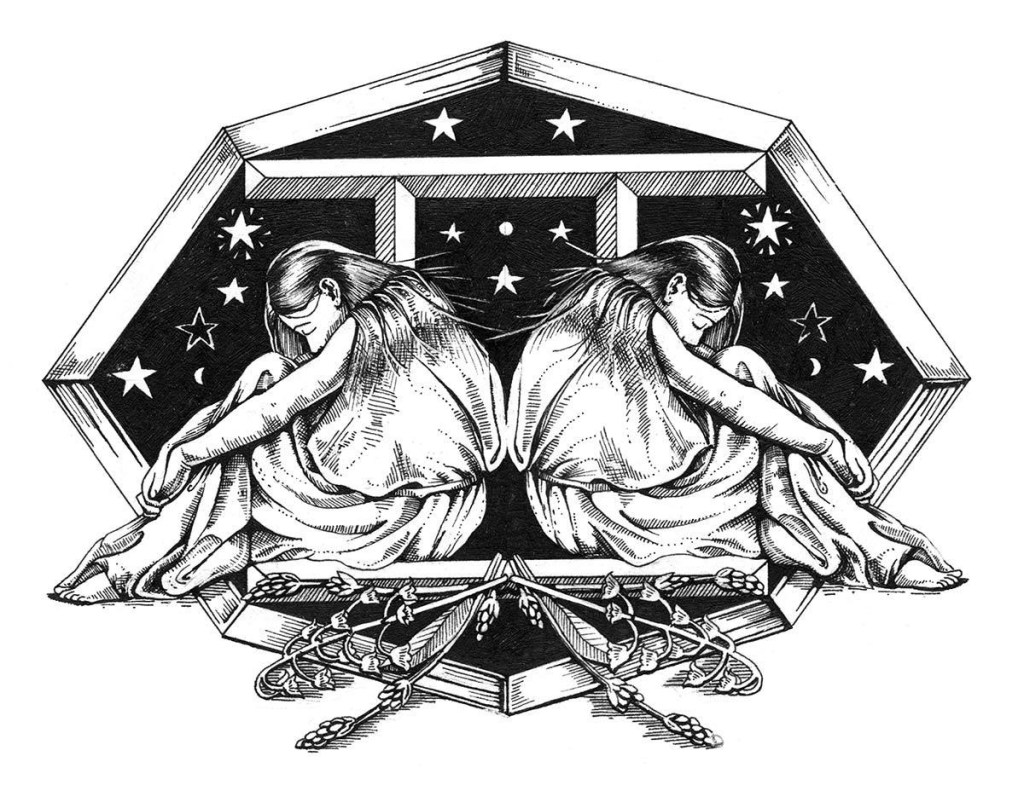
Gemini. A commission for ‘The Complete Astrologer’ by Derek and Julia Parker. 1981

I also explored my own realistic and abstract artwork and crafts, sculpture, clothes design, generally with a nature or recycling theme. Artwork was my healing journey from a childhood bereft of emotional comfort.

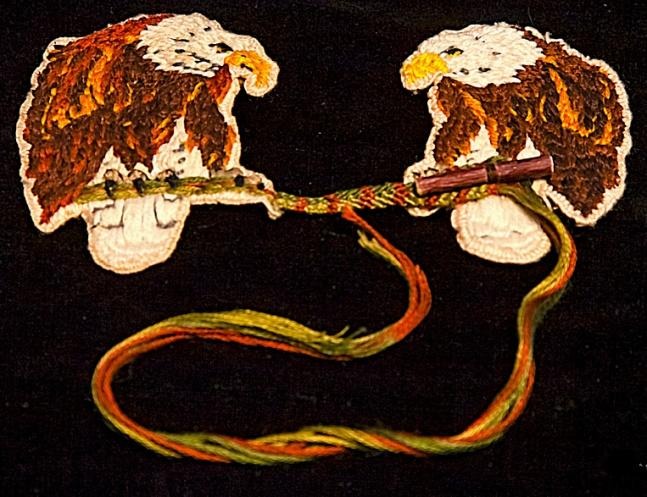
Embroidery eagles for a shirt collar. 1981

My work got bigger and bigger in size as my confidence grew.

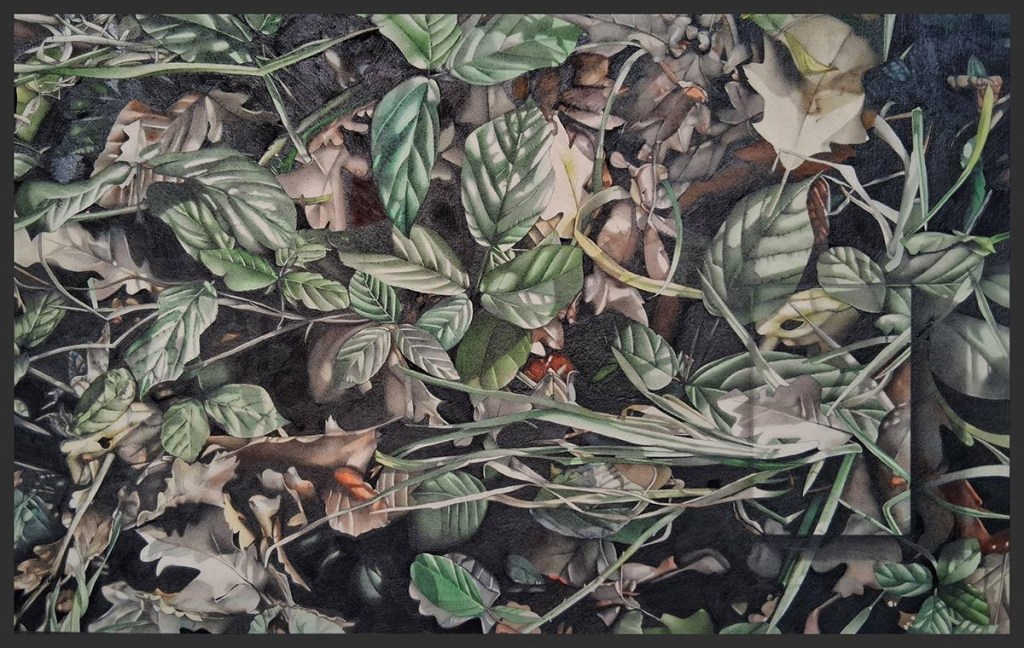
‘Blue Grass’ 1981 pencil and watercolour on paper.


In 1982, when I was 23 I had a motorbike accident and broke my leg in three places. The woman I was living with, Yvette was on the back and thankfully only bruised her knee. It was a complex fracture and they couldn’t operate immediately as I had friction burns on my leg. I found myself in traction, (they put a pin through the ankle and dangle a weight from it to pull apart the bones so they can realign them. Sounds like torture and it was!). Obviously some nurses and doctors were considerate but my experience of doctors standing at the end of my bed with their white coats on and clipboards talking about my condition without including me, stuck with me. Also asking a nurse for a bedpan and being told it wasn’t time for the bedpan round and I must wait. These were just two examples of emotionally unsafe behaviours that stayed with me for a long time. It was frightening. 

 ‘The Resting Biker’ 1982 oil on paper

Yvette came to visit me every day and when I came out of hospital I vowed I would never see a doctor again as I had felt so out of control. It was another pivotal moment where I began unconsciously building my need for complete autonomy and to find a healing space. The accident completely woke me up. I wanted a more spiritual life and I started to explore complementary medicine, diet and fasting to improve my physical health. 

I met Simo and Checca, the Italian twins at the women’s bathing pond at Hampstead Heath. Yvette moved out and they came to live with me. They had been brought up in rural Italy and moved to London when they were 11. They had gone to school at the famous Summerhill and were very open minded. They were outgoing sannyasins, disciples of Osho, an Indian Guru and I loved living with them. Through Osho, I learned about meditation, mysticism and spirituality. It was comforting and life affirming. Seeing life through the perspective of spirituality created a positive outlook. I also found a book called “You can heal your life” by Louise Hay and read it over and over. Its basic principle is “you are in control of your mind; it is not in control of you” and she provides exercises to let go of past painful conditioning and find that empowering place of being in control. She is also the queen of positive affirmations. 

Simo, Checca and I visited Italy for months and I loved it there. They both also knew about wholefoods and introduced me to cooking brown rice.

In 1987, when I was 28, I was having a conversation with my friend Roger and someone I had just met. This person asked me what I did for a living. I avoided the question and mumbled something about crafts. Roger said ‘she’s an artist!’ That was the first time I began to give myself that title.

That same year, Checca and I went to live in Italy. This created the real foundation for my connection with nature. My first activity was to collect figs from a tree and eat them, I loved it and it made complete sense to me. We collected and cracked pine nuts on a stone and made pesto with fresh basil. We stayed with Checca’s dad for a while. He was an accomplished artist. He foraged, including mushrooms.

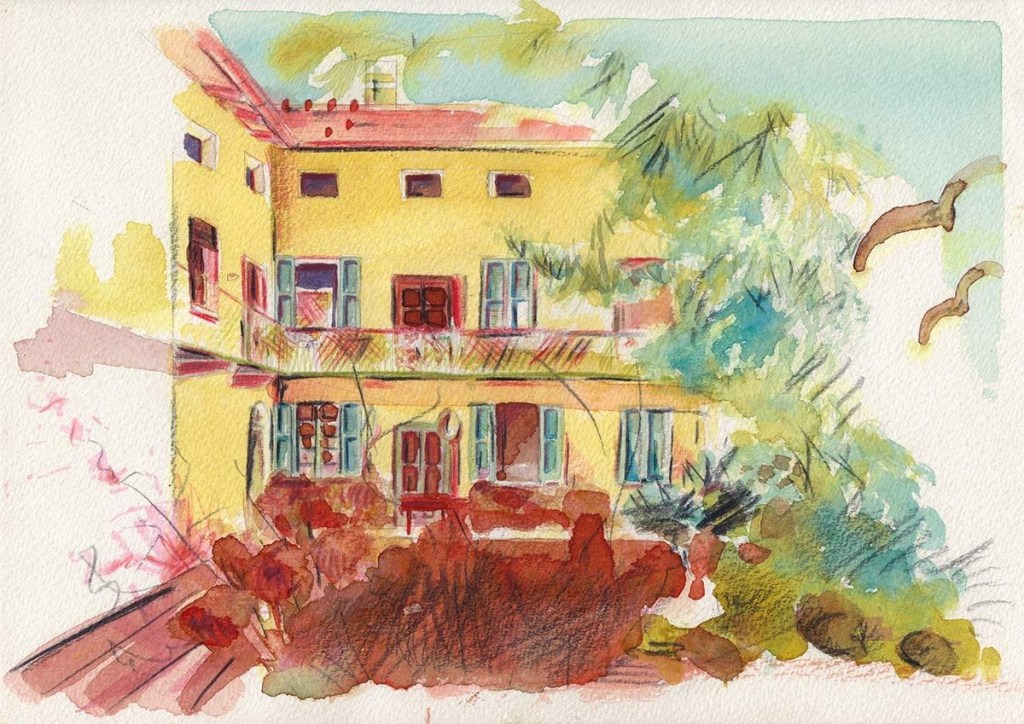
‘Antonio’s Garden’ 1990 ink on paper.(Checca’s dad’s house)

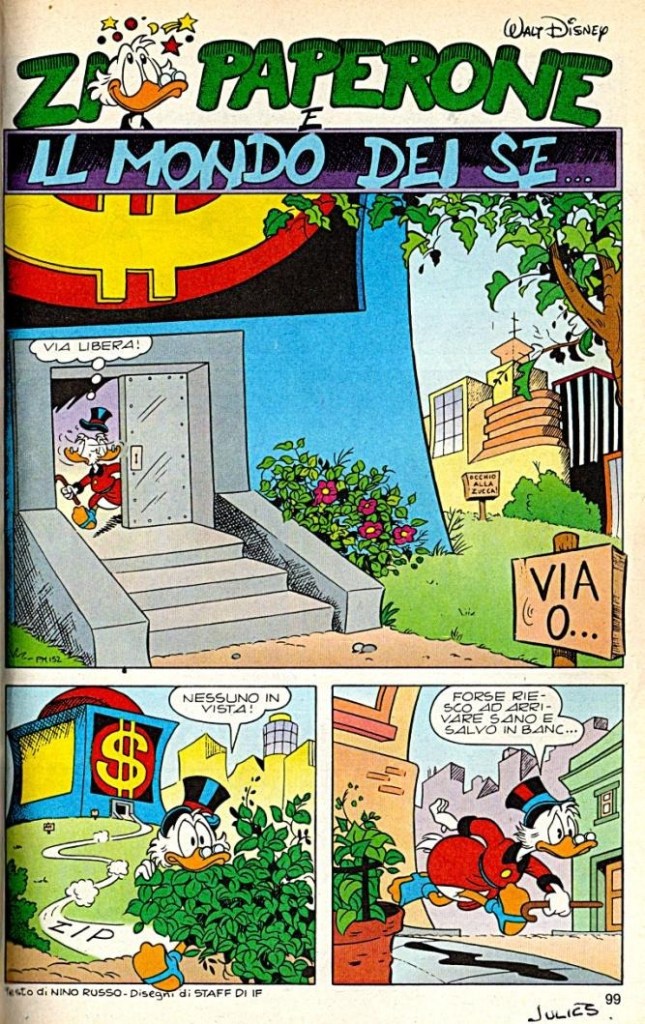
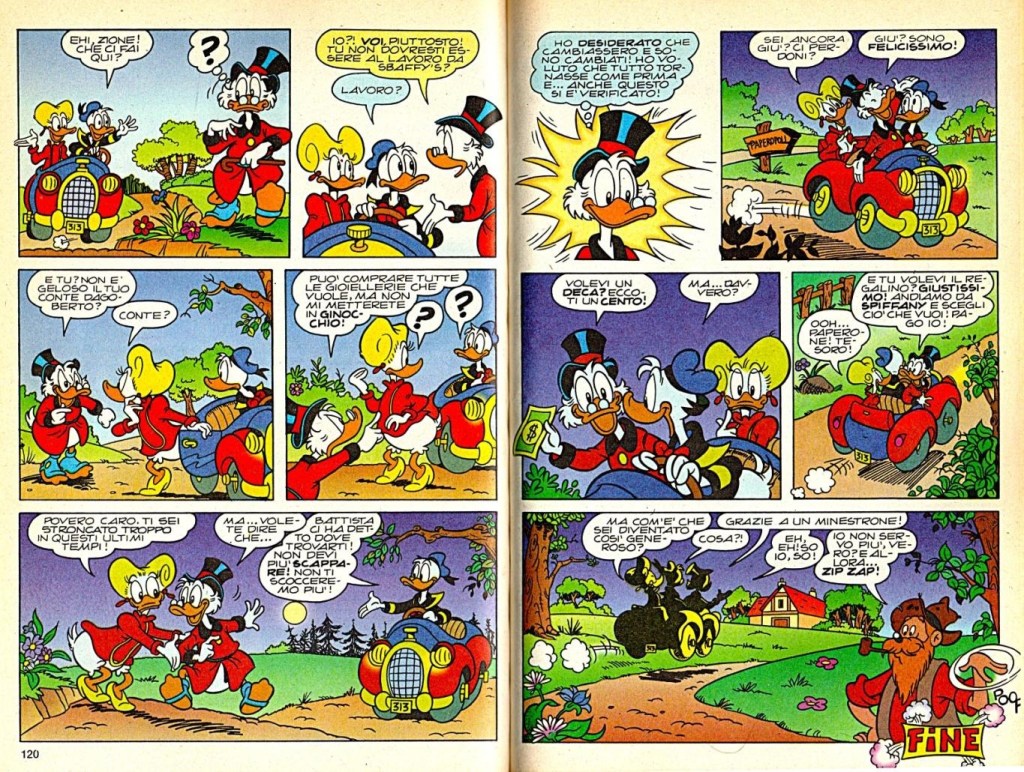
After almost a year with Checca’s dad and also staying at our friend Roberto’s house, we found a house to live in at the edge of a quiet village in the countryside. I meditated, (working on my inner demons of depression) and got a job working for Walt Disney drawing cartoons of Donald Duck for ‘Paperino Mese’. I would work at home during the week and go to Milan on Saturdays to the Walt Disney Studio to have my work assessed.

My drawings for ‘Paperino Mese’ 1991

In 1990, when I was 31, I came back to the flat in London which had been kept on by Simo. Checca stayed in Italy, Simo moved out of the flat and I lived there on my own. 

As I was healing, the eighth floor of a noisy tower block next to a main road with noisy neighbours all round me and no sound insulation, became a place of deep suffering. I could even hear my neighbour Tracey downstairs sweeping the floor. The sound of Tracey’s bass-heavy music in the night for two years and environmental health being unable to catch her brought me to a nervous breakdown, a catharsis, in 1998 and I was sent to a psychiatric hospital for a week. I then spent further spells in crisis centres and took anti-depressants until one day during a massage at the crisis centre, I broke down and exclaimed to the masseuse, “I’ve lost my soul”. I stopped the anti-depressants immediately.

The outer issue was always noise. The noise that humans create which, to me, made the sounds of nature harder and harder to hear. I longed for silence and the only sounds being the sounds of nature, I was obsessed with it. I felt breathless without it. I told a carer in the crisis centre that I longed to hear the sound of the birds and she said “well, we’ve got a birdsong tape!” I could have screamed; she didn’t get it. I wanted to be so immersed in nature that there was no separation. Birdsong on a tape was just another human invention and all part of my disconnected environmental crisis. I wanted the real thing, but I was on the dole, DHSS (Department of Health and Social Security) feeling ashamed and guilty. My friend Prabhu helped when he said, ‘Don’t feel guilty, it’s DHSS—Divine Help for Spiritual Seekers!`. I was living on £50 a week, no money in the bank and living, ‘existing’ in a noisy tower block in London. Sometimes I sat on my balcony at the flat with my hands over my ears, rocking from the insanity of the noise; traffic, household noises from uninsulated flats, police sirens, fire engines…and nature seemingly so far away out of my reach. My solace was to walk through Alexandra Palace park to Crouch End to buy my shopping from the health food store. Alexandra Palace was a walk across a little park next to my allotment and over the railway bridge. I also started to see counsellors and this gave me a feeling of strength and security. However, I couldn’t get out of the flat. No-one wanted to home swap to a tower block, I was trapped.

 ‘A Fine Line’ 1998 oil on canvas

I was continuously burdened with the thoughts of how to raise enough money as an artist to get a mortgage and buy my own place. It was a crazy idea, I was an Artist! Money was an alien concept, and consistently making money without feeling utterly stressed was even more alien. I had been on and off the dole for years, coming off to do a few months of freelance work and then signing back on again. I couldn’t cope with the pressure of relentless work; it sucked the joy and the purpose out of making art. Thinking only of the conventional route clearly wasn’t for me, but what was the solution?

I spent the next few years going in and out of the crisis centre, figuring out in my mind, what I wanted. On one visit, I met a man who did photography. He showed me one of his pictures. It was a barge going through a tunnel and there was a small bright light at the end. It made me ask, “What is my light at the end of the tunnel?” and my first thought was “America”! So I made that a goal. Unbeknownst to me at the time, my trip to America was to be another foundation for my deep inner craving for a more natural life.

Ecology of the absurd, South Korea

The Threshold of the Monsoon

by YOON JAEMIN

A temporary but urgent call to action! Centre of the Web partner Versy Talks is kindly running a free public online debate about the publishing industry from 21st to 31st May 2026. It does not take long to take part in the debate and state your opinion, and everyone is welcome! Sharing your voice will help boost both COTW and Versy Talks. Please help us grow, so that we can platform diverse and underrepresented voices from around the world. More information can be found here.

There is a certain “myth” about Korean geography and climate, passed down among those born and raised in Korea, though one senses its meaning gradually fading with age. “A peninsula surrounded by seas on three sides.” “A climate with four distinct seasons.” These are deeply familiar notions of the homeland’s nature and landscape for those born and educated in the south of the Korean Peninsula in the latter half of the twentieth century and after. From early childhood, Koreans were taught to recognize the Korean Peninsula and its surrounding islands—the constitutional territory of the Republic of Korea— as “our country,” likened to the shape of a rising tiger. We believed that the 365 days of this fierce tiger-shaped land, roaring toward northeastern China with the Taebaek Mountains as its spine, were painted in the ever-shifting colors of spring, summer, autumn, and winter. The “distinct four seasons of the complete Korean nation-state,” stretching from Mount Paektu to Mount Halla, formed one of the foundational images of nation and landscape in the minds of Korean children.

To a certain extent, this was grounded in reality. For more than eighty years, the two governments on the Korean Peninsula have regarded each other with hostility while each claims the tiger-shaped peninsula facing the continent as its homeland. The climate, too, is severe and mercurial. In the central region of the peninsula where I was born and have lived for nearly forty years, every year brings heavy snow and bitter cold during the year’s end and beginning, followed by summer heat soaring well above 30 degrees Celsius from June through August. Such cycles have long shaped the rhythms and lifeworlds of ordinary Koreans like myself. Spring and autumn—the transitional periods between winter and summer—were relatively mild seasons, moments of temporary recovery for bodies and minds exhausted by the brutality of the extremes.

Yet Koreans, myself included, also know that this “myth” is slowly collapsing. Our actual lived experience as Koreans educated and raised in Korea increasingly compels us to doubt it. As is well known, the practical territory of Korea for most Koreans is limited to the land south of the Military Demarcation Line, which stretches in a wavering curve from Baengnyeong Island in the west to Goseong County in Gangwon Province in the east. We were taught to regard Mount Paektu, rising 2,744 meters along the Yalu River bordering China, as “the sacred mountain of our people” and “the highest mountain in our country.” Yet from South Korea there is no way to visit “our territory” on Mount Paektu directly. The only possible route is through China, and even then one may only stand on the land outside the territory effectively controlled by North Korea. For this reason, many South Koreans, myself included, tend in practice to think of Mount Halla on Jeju Island, standing 1,947 meters above sea level, as the nation’s highest peak. The collective imaginary geography of a fierce tiger peninsula divided by the Military Demarcation Line often diverges from the actual geographical sensibilities of Koreans like myself. For South Koreans, whose human and material exchanges with North Korea are completely severed, the Republic of Korea is effectively an island.

There is equally much to say about the climate. “Four distinct seasons”? Controversial though it may sound, I increasingly feel that spring and autumn are disappearing from Korea. The 365 days of the year seem to be collapsing into the two brutal extremes of summer and winter. This is not merely a personal impression. According to the Korea Meteorological Administration, the average annual temperature of the Korean Peninsula rose by 1.6 degrees Celsius over roughly a century, from 1912 to 2020. The rate of warming, moreover, continues to accelerate. Over the past thirty years (1991–2020), summer has lengthened by an average of twenty days, and the trend is expected to intensify further. Rising temperatures have caused spring and autumn to converge into summer. As a result, unlike in the past, we now experience the year as though we pass abruptly from summer into winter, having lost the buffer zones once provided by spring and autumn.

What was it like in the past? Consider Monsoon (1935), a work by the celebrated modernist writer Yi Tae-jun (1904–1978) from colonial-era Korea. The story unfolds at the threshold of summer after spring has passed, during the humid and sweltering season Koreans call the ‘Jangma,’ the East Asian monsoon rains. Traditionally, the monsoon season has been difficult for Koreans to endure. Premodern living spaces on the peninsula, designed primarily to survive the harshest period of the year—the winter—were ill-suited to withstand a hot, humid climate that brought nearly thirty percent of the annual rainfall. The narrator, “I” (effectively Yi Tae-jun himself), feels the same. For a man drifting through colonial Korea under Japanese rule without any real occupation, passing his days idly, the monsoon season is unbearable in every sense. Each morning he must wake to the damp smell of mold clinging to the bedroom, bedding, and bookshelves. His wife suffers as well. The oppressive humidity filling the house aggravates her already frayed nerves over their meager household finances. It is hardly surprising that arguments erupt between them. Irritated by his wife’s nagging, “I” has little choice but to leave the house and wander the streets.

Yet he has nowhere in particular to go. He merely drifts endlessly through the humid, sweltering boulevards of colonial Seoul. Thus “I,” as an anonymous urban subject, surrenders himself to the fluid dynamism of metropolitan space, wandering aimlessly in thought. He hopes to run into friends such as Yi Sang and Gubo—modernist writers of colonial Korea, much like Yi Tae-jun himself—men who share his circumstances. But the city does not permit such encounters. There is no special reason for it. His small gamble of going out that day simply fails. Nothing changes. It is only an ordinary afternoon during the monsoon season, much like all our urban walks.

The reality of Korea in the mid-1930s was deeply complex. The Great Depression had made ordinary life even more difficult. Meaningful employment for Korean intellectuals—second-class citizens within the imperial order—was extremely scarce. The narrator’s wandering through the city captures the unremarkable everydayness of that era. His groundless optimism that he might accidentally meet fellow Korean writers in similar circumstances forms the other side of the same coin as his powerlessness before reality. In Gyeongseong, the colonial capital of Korea and a forward base for the Japanese military’s invasion of China, Koreans endured each day under intensifying ideological repression and growing intellectual humiliation.
And yet, the worst had not yet arrived. The people of colonial Korea were unknowingly waiting for the total-war era of the 1940s that would soon descend upon them. Of course, neither the narrator nor anyone else knew the fate awaiting them. But while strolling through a colonial Seoul outwardly more glamorous and bustling than ever before, “I” suddenly voices a reflection that seems almost prophetic of the catastrophe to come:

“I transferred to the streetcar at Anguk-dong. It may be Anguk-machi now, but it still feels right to call it Anguk-dong. I cannot help but resent how every dong and ri has been entirely transformed into machi. To regulate culture solely according to the efficiency of business is a misguided importation of Nazism. (…) At this rate, in a few years they may even decide that names like Lee, Kim, Park, and Jeong are too disorderly, and find some way to control citizens’ personal names as well.”

Remarkably, this did in fact come to pass only a few years later. Under the military regime’s radical expansionist policies and in the name of Pan-Asianism, the people of colonial Korea were mobilized into the total-war system and forced to adopt Japanese names in place of their Korean ones. Seen in this light, the narrator’s insight is astonishing. Yet he did not seriously predict the future. It was merely a passing thought during an idle urban stroll.

Now, nearly a century later, in the year 2026, I often walk through the old downtown districts of Seoul where Monsoon was set whenever I feel restless. A brutal winter during which I suffered badly from influenza has finally passed, and I am writing this essay at the threshold of a summer that seems to grow shorter every year. Korea will soon enter the monsoon season again. The monsoon is not the harshest season for Koreans. It is unpleasant and melancholy, but it is not the worst. The worst is yet to come. That is what I feel now. Nor is it merely a premonition about the climate. Like Yi Tae-jun before me, I stand at the threshold of the monsoon and sense keenly that the world’s worst days have not yet arrived. What will become of the world ahead? I pray for everyone’s well-being.