DIARIES & MEMOIRS: COUNTRIES A-Z, England

Building Silent Haven: Introduction & Chapter One

INTRODUCTION

I come from a background where feelings and needs were not discussed, leaving me somewhat in the dark as to who I was and what I needed in life. I did know quite clearly from an early age that art was a major source of joy and comfort and this was my saving grace. In adulthood I was unconfident and unsure about my choices but assumed that if I worked hard I could become a well known artist. I used to have visions of living in an exclusive apartment in New York and having shows in major galleries. Finding that I had major obstacles to this route, (I hated being out there and doing publicity, or talking about money for my freelance art commissions, for example) I lived frugally and just made art. Over the years the pressure built up, my choices of environment were very limited and this made me ill. I had no idea I had inner cravings for a natural way of life let alone how to achieve it. Eventually, the dam burst and the river flowed out freely but not in the way I expected. Looking back, the journey that I went on was so much more in tune with who I am and what my needs are. This journey was much more nourishing than I could ever wish for. In a labour of love, the idol that took shape came to be known as Silent Haven. 

CHAPTER ONE

In 1963, when I was five, my parents, brother and I moved from the home I was born in, in Yorkshire, to Leicester. The house was newly built and there were no other houses surrounding it; it was surrounded by open fields and felt spacious. That didn’t last. Houses were being built around us. My fondest memories were the first few days as the electricity and gas hadn’t been connected yet. It had a significant impact on me, and I remembered this when my partner and I started building the cabin at Silent Haven. There was no time to get the furniture in place before dark, so we all slept on mattresses on the floor in the lounge. My mom made food on a little camping gas stove, and we burned candles. There was a fireplace, and we lit a fire. I loved it. It was atmospheric; we were in it together, camping, surviving, basic and connected in this marvellous adventure. 

That was one of the best nights I ever had in that house. Then this chaotic but casual and relaxed atmosphere began to disappear. The electricity and gas were turned on so the cooking was done in its proper place in the kitchen, with food being eaten at the table. My spirits sank when the beautiful warm and exciting hub of the house got filled up with an ugly gas fire and I don’t think they ever recovered. The place just wasn’t the same after that and it felt like neither were the relationships. After that first night it was back to the frosty barrier of my brilliant, but controlling and frightening mother. I thought my upbringing was normal until years later when my school friend Claire said my mother ‘ruled me with a rod of iron’. My dad provided relief by cracking silly jokes and making me laugh, but anything emotional was immediately swept under the carpet.

The house sat in a lovely woodland garden. I loved the feeling of the trees surrounding and protecting us on two sides and how beautiful they were but we were on the corner plot, and it was otherwise very open. As the other houses were being built I retreated in doors more and more as I was painfully shy. My parents were about the only people in the neighbourhood who wanted to keep their trees; everyone else must have thought they were a nuisance, because they were getting cut down. I only realised after doing a session of eco-therapy at university, how disconnected I had been from the earth —this was until I bought Silent Haven, this land that quenched a long period of dehydration. 

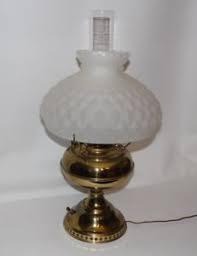
After the electricity-free night in my new childhood home, I asked for a paraffin lamp as my bedside lamp. Stepping back into my inner child’s shoes, I feel I was responsible enough to have one. Of course, the answer was no. The compromise was a fake paraffin lamp, with a fixed key I could pretend to turn to raise the light level and a removable bowl. I loved that lamp nevertheless.

***

My childhood lamp

***

My parents were very creative and resourceful, and this is the thread for my way of life. I decided to become an artist at the age of 12. Fast forward to 1977, at the age of 18 I spent a year doing an Art Foundation Course at Leicester Polytechnic. It was situated in a beautiful old school. My dad would take me early before anyone else got there so I had time to adjust my hair and my make-up. The course consisted of all kinds of art: life drawing, sculpture, oil painting, illustration, photography and textiles. I loved it and wanted a degree in all these subjects but I had to choose one subject. I chose Graphic Design, I think because that was the most likely to make money. My grandparents were from a poor mining background and that was still in my system.

***

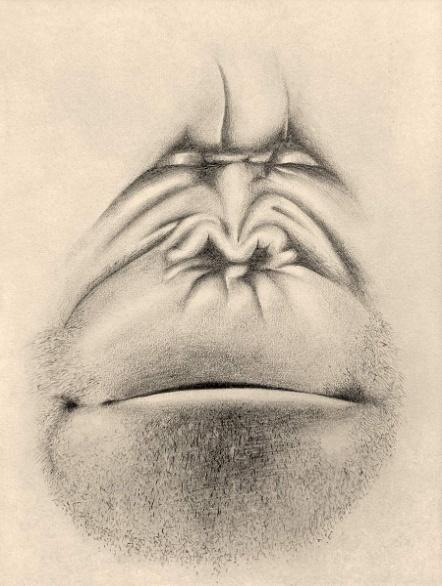
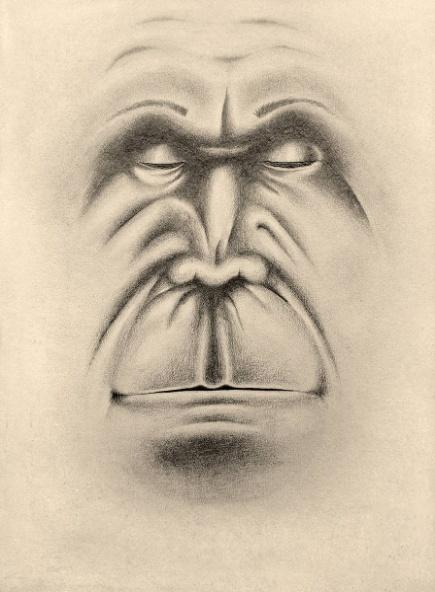
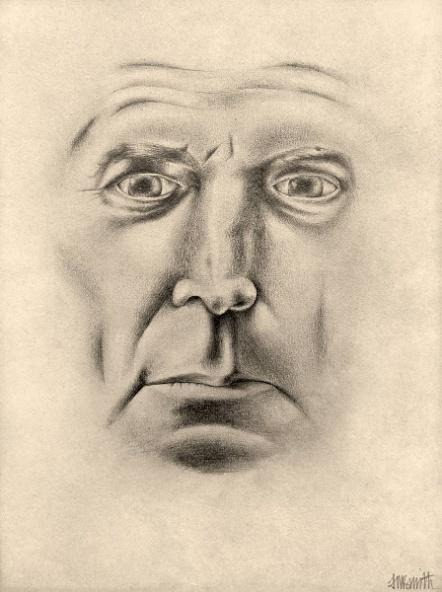
Metamorphosis, 1977

***

I left home in 1978 at aged 19 and went to St Martin’s School of Art in London and lived in Ralph West Hall of Residence for the first year, just beside Battersea Park. I loved the communal living. Although I had art as a meditation, I was on a destructive path of depression, drinking, smoking and experimenting with different types of drugs. I had been brought up in a household where, although I had many physical privileges, which I was grateful for, my mother had been in control of my life and on moving to London, I suddenly had complete freedom yet didn’t know who I was. I was trying to make sense of my world but was vulnerable and without boundaries. I was also extremely sensitive to noise and I didn’t realise this. Certain noises deeply triggered me, but at that time I didn’t know what they were. The drugs and alcohol numbed the fear. 

By Jules Smith

Reflections

Breaking consensus as proof of love (#1)

Last night I had a dream that I was sat at a table with strangers, as if it were a lunch table during a group retreat somewhere, and an older guy sat next to me and started talking to me about love. Somehow I understood that he was a Christian philosopher, and I told him I didn`t mind him talking to me, but I could assure him that he would not convert me to Christianity. He was unfazed by my words, and proceeded to explain that there are two ways to analyse love. The first is a cool intellectual way, observing that love exists between all of us. Which is a nice thought, he said. And the second way is by breaking consensus. He did not have time to explain fully what he meant before I woke up, but directly after I woke up, and was lying in bed, I started to contemplate this: How can love be analysed by breaking consensus? I came to the conclusion that breaking a consensus view (or putting forward an individual view that is different to the consensus view on something, held by a group of friends you are part of, or your family, or any other group) is a test of love because it is a potential source of conflict. But also it is a demonstration of love, that you love and trust other people enough to openly differ from them, though it should be done respectfully. It further could demonstrate a higher love of Truth and love of the truth inside yourself, equivalent to a high level of self-respect, because if you stay silent when you disagree with a group which you are part of, you are not being true to yourself or to the unfolding universe. But this is not always easy to deal with and practice. Sometimes we pretend it is easier to go with the flow and stay silent, even when going with the flow is actually blocking our private flow.

This post was originally published on Schemattic here.

Psychedelic Collapse

Psychedelic Collapse

Many aspects of the ongoing Collapse of contemporary civilization can be seen to be psychedelic, in that they do not conform to our perceptual expectations of daily life, and in that they are a revealing of deeper levels of reality than are usually in our consciousness. In this context, I wonder what ingesting psychoactive substances might do to deepen acceptance and understanding of Collapse.

Recently, my wife and I have experimented with psilocybin in the form of so-called magic mushrooms. The last time we took some, we ingested just over one gram each, the highest dose we have yet tried. We were strongly driven by the desire to end my wife’s depression and other psychological dis-ease, which she has been suffering from for several months (actually, years). Conventional anti-depressants / medication are having a limited (although important) effect, and in any case she wants to be free from these, eventually. In times of Collapse, it is also unwise to prolong reliance on any form of medication longer than necessary, considering the instability of global and regional supply chains.

After experiences with lower doses which had affected me but not my wife, we were worried that the effects of psilocybin might be blocked by her medication (venlafaxine, lamotrigine and aripiprazole) but as it turned out, on this highest dose, we both experienced feelings of elation and clarity, there was a lot of laughing (this is the first time in several weeks I had heard my wife laugh for longer than a second), and she was able to reflect with self-deprecating humour on her thought patterns that only hours before had had her deep in depression.

On a protracted and mass scale, what insights into the ‘depression’ of collapsing modern civilization might us humans collectively gain, were the use of pyschedelics to become normalised? Might organic substance-induced psychedelic experiences help us align more usefully with the distortions of Collapse?