DIARIES & MEMOIRS: COUNTRIES A-Z, England, Exclusive to COTW

Building Silent Haven: Introduction & Chapter One

INTRODUCTION

I come from a background where feelings and needs were not discussed, leaving me somewhat in the dark as to who I was and what I needed in life. I did know quite clearly from an early age that art was a major source of joy and comfort and this was my saving grace. In adulthood I was unconfident and unsure about my choices but assumed that if I worked hard I could become a well known artist. I used to have visions of living in an exclusive apartment in New York and having shows in major galleries. Finding that I had major obstacles to this route, (I hated being out there and doing publicity, or talking about money for my freelance art commissions, for example) I lived frugally and just made art. Over the years the pressure built up, my choices of environment were very limited and this made me ill. I had no idea I had inner cravings for a natural way of life let alone how to achieve it. Eventually, the dam burst and the river flowed out freely but not in the way I expected. Looking back, the journey that I went on was so much more in tune with who I am and what my needs are. This journey was much more nourishing than I could ever wish for. In a labour of love, the idol that took shape came to be known as Silent Haven. 

CHAPTER ONE

In 1963, when I was five, my parents, brother and I moved from the home I was born in, in Yorkshire, to Leicester. The house was newly built and there were no other houses surrounding it; it was surrounded by open fields and felt spacious. That didn’t last. Houses were being built around us. My fondest memories were the first few days as the electricity and gas hadn’t been connected yet. It had a significant impact on me, and I remembered this when my partner and I started building the cabin at Silent Haven. There was no time to get the furniture in place before dark, so we all slept on mattresses on the floor in the lounge. My mom made food on a little camping gas stove, and we burned candles. There was a fireplace, and we lit a fire. I loved it. It was atmospheric; we were in it together, camping, surviving, basic and connected in this marvellous adventure. 

That was one of the best nights I ever had in that house. Then this chaotic but casual and relaxed atmosphere began to disappear. The electricity and gas were turned on so the cooking was done in its proper place in the kitchen, with food being eaten at the table. My spirits sank when the beautiful warm and exciting hub of the house got filled up with an ugly gas fire and I don’t think they ever recovered. The place just wasn’t the same after that and it felt like neither were the relationships. After that first night it was back to the frosty barrier of my brilliant, but controlling and frightening mother. I thought my upbringing was normal until years later when my school friend Claire said my mother ‘ruled me with a rod of iron’. My dad provided relief by cracking silly jokes and making me laugh, but anything emotional was immediately swept under the carpet.

The house sat in a lovely woodland garden. I loved the feeling of the trees surrounding and protecting us on two sides and how beautiful they were but we were on the corner plot, and it was otherwise very open. As the other houses were being built I retreated in doors more and more as I was painfully shy. My parents were about the only people in the neighbourhood who wanted to keep their trees; everyone else must have thought they were a nuisance, because they were getting cut down. I only realised after doing a session of eco-therapy at university, how disconnected I had been from the earth —this was until I bought Silent Haven, this land that quenched a long period of dehydration. 

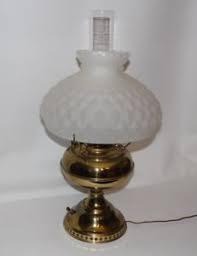
After the electricity-free night in my new childhood home, I asked for a paraffin lamp as my bedside lamp. Stepping back into my inner child’s shoes, I feel I was responsible enough to have one. Of course, the answer was no. The compromise was a fake paraffin lamp, with a fixed key I could pretend to turn to raise the light level and a removable bowl. I loved that lamp nevertheless.

***

My childhood lamp

***

My parents were very creative and resourceful, and this is the thread for my way of life. I decided to become an artist at the age of 12. Fast forward to 1977, at the age of 18 I spent a year doing an Art Foundation Course at Leicester Polytechnic. It was situated in a beautiful old school. My dad would take me early before anyone else got there so I had time to adjust my hair and my make-up. The course consisted of all kinds of art: life drawing, sculpture, oil painting, illustration, photography and textiles. I loved it and wanted a degree in all these subjects but I had to choose one subject. I chose Graphic Design, I think because that was the most likely to make money. My grandparents were from a poor mining background and that was still in my system.

***

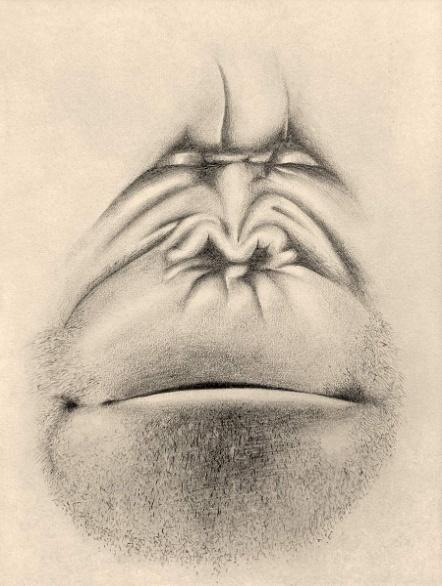
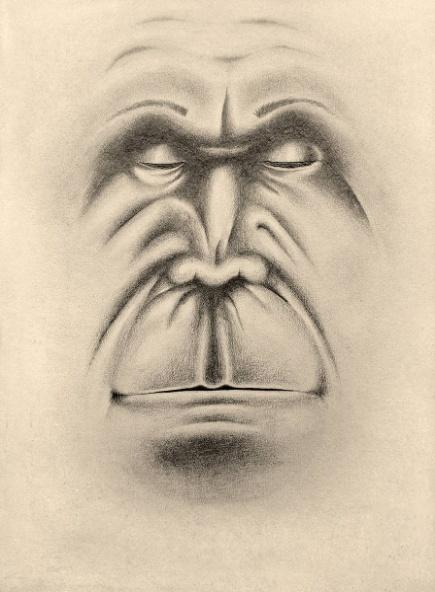
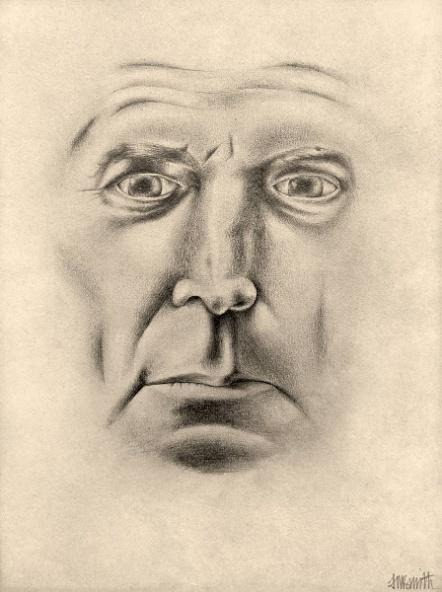
Metamorphosis, 1977

***

I left home in 1978 at aged 19 and went to St Martin’s School of Art in London and lived in Ralph West Hall of Residence for the first year, just beside Battersea Park. I loved the communal living. Although I had art as a meditation, I was on a destructive path of depression, drinking, smoking and experimenting with different types of drugs. I had been brought up in a household where, although I had many physical privileges, which I was grateful for, my mother had been in control of my life and on moving to London, I suddenly had complete freedom yet didn’t know who I was. I was trying to make sense of my world but was vulnerable and without boundaries. I was also extremely sensitive to noise and I didn’t realise this. Certain noises deeply triggered me, but at that time I didn’t know what they were. The drugs and alcohol numbed the fear. 

By Jules Smith

Exclusive to COTW, Genderwild

Queer vulture

Somewhere in the Southwest of the Fragmented States, our 4 by 4 broke down. We scratched around in the desert dirt, looking for Roman coins. But every coin we thought we found, turned out to be a Coca-Cola bottle top, printed as a Roman coin. Coke knew their time was nearly up; they wanted their remains to be rediscovered as greatness.

It was a hot day. Not bleak as it should have been, but orange, fiery, with a sense of adventure. The adventure came from the sky, a genderwild vulture which I knew to be me, wearing frilly skirts, leggings, talons, wings, and barbs on long threads shooting out from its head, like a cat o’ nine tails, but made of softer material, like a spider`s web, with tiny soft spheres along the lengths of the threads, like knots. It somersaulted in the air, neither male nor female, it was clearly both joyous and dangerous, but without a clear head.

The genderwild vulture was a sign. A sign for my wife, who appeared next to me in the desert. She said This is for you, at which the vulture took me through a void in the desert to a completely different world. From unconsciousness I descended down into a system of deep caves, thrilled. Finally, amongst a procession of others, I was led into a cavern, where our hosts sung a choral piece, the purpose of which was to remind us to hang up our coats. Someone mentioned Jane Eyre, which I have never read. At this point, the dream dissolved…I wonder what clues Jane could have for the genderwild?

Ecology of the absurd, Exclusive to COTW

Slow burning bestseller (#2): climate collapse was yesterday

To say that climate collapse was yesterday is a provocate statement which sounds either like climate denialism or climate fatalism. However, the way I mean it, it is neither. What I mean is, catastrophic climate warming is locked in (just read the scientific communications of James Hansen, here). Existing warming and warming in the pipeline guarantee severe societal disruption over the coming decades, at the very least. That doesnt mean we shouldnt reduce greenhouse gas (GHG) emissions as much as possible, right now. It doesnt mean we shouldn`t repair damaged ecosystems. It does mean we should have a sober assessment of possible future scenarios in our own lives and those we are connected to, and put strategies in place, ideally, which could deal with many of these scenarios equally.

Meanwhile, please take a look at the anthology I edited for Arkbound: Climate Collapse? -Calls to Action from Around the World. This anthology features many diverse voices on the subjects of the climate crisis, the related global ecological crisis, and the societal collapse induced by these crises. It might not be quite appropriate for me to end with the imperative, Enjoy!