DIARIES & MEMOIRS: COUNTRIES A-Z, Many feminisms, South Korea

[번역본] A Quiet Embrace (조용한 품)

By PAK Jong Hee

A temporary but urgent call to action! Centre of the Web partner Versy Talks is kindly running a free public online debate about the publishing industry from 21st to 31st May 2026. It does not take long to take part in the debate and state your opinion, and everyone is welcome! Sharing your voice will help boost both COTW and Versy Talks. Please help us grow, so that we can platform diverse and underrepresented voices from around the world. More information can be found here.

Inside the fresh green leaves, the ingredients sit quietly, curled up. The pumpkin leaves and cabbage, steamed until tender in a boiling pot, hold their contents firmly, their cheeks slightly bulging. From the outside, there is no way to know exactly what lies within those leaves, but there is a heavy certainty that they have willingly accepted everything. Not a single grain of white rice spills out; everything keeps its place in silence, leaning kindly against one another.

Wrapping a ssam (leaf wrap) is a more delicate ritual than one might think. Depending on which leaf one spreads on the palm and what is placed upon it, the weight and flavor of that single bite change entirely. When the depth of flavor is added by mixing salty soybean paste with spicy chili paste and topping it with a thin slice of garlic, the disparate, unfamiliar ingredients finally find their place, creating an exquisite harmony. Things that might taste coarse or plain when chewed separately come together to fill each other’s voids, highlighting one another’s strengths to craft a new flavor. In this way, a ssam rounds off the jagged edges of each ingredient, tucking them inside to form a solid, whole shape on the outside.

Gimbap is no different. The black dried seaweed (gim) embraces the inner ingredients tightly, never revealing them until the very end. The sharp sourness of the pickled radish, the subtle earthiness of spinach, and even the awkward flavors of leftover side dishes from a holiday—the seaweed silently enfolds them all. It does not question what has entered its embrace; it simply maintains a calm, neat cylindrical form.

My mother made gimbap as if it were her destiny. Whenever there were leftovers from the feast-like meals she prepared for holidays or birthdays, her final grand meal was always gimbap. While the outward appearance was the same every time, the inner ingredients changed with the seasons and occasions. After the holidays, it was filled with leftover japchae and pan-fried delicacies; on birthdays, it held beef and thick egg rolls; on other days, it was packed with various wild greens like water dropwort and thistle.

Before rolling the gimbap, Mother would always crisp the seaweed once more over the frying pan. That meticulous touch, meant to erase any trace of the seaweed’s characteristic fishy scent so her children would not notice, was a silent sincerity—a love that filled the space from invisible places.

My mother’s gimbap was not only special to our family. During my school days, on picnic days, my lunchbox was undoubtedly the most popular among my friends. In front of the gimbap my mother had rolled so skillfully and heartily, my friends would push aside their own lunchboxes. They would huddle around and reach their chopsticks busily toward my container, often leaving me staring at an empty box after having eaten only a few pieces myself. Yet, as I watched my friends marvel and devour it in the blink of an eye, I felt a sense of pride rather than disappointment, even in my young heart.

Inside that delicious gimbap that captured my friends’ palates were actually ingredients with very strong personalities. There were shredded red carrots with a deep earthy scent, and water dropwort with a piercing aroma. Having a weak stomach and a sensitive sense of smell since childhood, I could usually hardly eat foods with strong scents. I would not even point my chopsticks at carrots, water dropwort, or fishy anchovies. Curiously, however, those finicky ingredients became gentle once they entered the gimbap.

Those intense aromas, which usually stood out, never felt out of place. This was because the savory sesame oil seeped between the rice grains and ingredients, breaking down the boundaries of flavor, while the soft, thick egg strips kindly embraced the tough scents of the other ingredients. The process where clashing smells and strong tastes met the gentle mediators of sesame oil and eggs to become rounded and blended—it was a perfect reflection of my mother’s arduous life, raising six siblings who were all so very different.

Though we were born from the same womb, our colors and temperaments were remarkably distinct. My eldest brother, the firstborn, matured early and heavily, weighed down by the responsibility of looking after his younger siblings. Like the thick egg roll that holds the center of the gimbap steady, he silently endured his own weight and served as a reliable shield for us. On the other hand, the youngest was as fresh and free-spirited as water dropwort, tending to go in any direction. The youngest’s stubbornness in seeking freedom and the bickering voices of us siblings in between expanded precariously, like the inside of a thick, uncut roll of gimbap.

In the midst of that fierce difference, to ensure her children did not scar one another, Mother had to become the black seaweed, giving her entire body to hold us together. Just as she applied savory sesame oil to prevent the stubborn carrots and unruly water dropwort from clashing, Mother moved busily between this child and that, becoming a smooth lubricant. She trimmed our coarse hearts with warm, coaxing words and, like sticky grains of rice, patiently glued our jagged edges together.

Always anxious that one of us might go astray or be isolated and hurt among the siblings, she nurtured us with constant care. Even in the exhaustion of feeding and clothing six mouths until her hands and feet were blistered, she never treated a single child with neglect, pulling us all equally into the wide folds of her skirt. The reason that a thick, heavy roll of gimbap—our six siblings—could maintain the shape of a complete family without bursting or scattering was entirely thanks to my mother’s tough and devoted embrace, which endured all the tension and weight from the outside.

Ssam and gimbap do not boastfully reveal their contents. Even if one does not say what is inside, the moment you take a large bite, all the sincerity and harmony layered within are fully conveyed to the tip of the tongue. My mother’s heart is the same. Even without loudly proclaiming her love, and even without trying to show her bent back and calloused hands, I now know that the warmth she created by looking after and comforting us from within has already become the most solid foundation of our lives.

The quiet embrace of ssam and gimbap, which rounded and enveloped so many differences and jagged parts… Thanks to that abundance, we were able to grow up taking sweet, thoughtless bites of something as savory as sesame oil and as soft as eggs, without directly facing the bitter and harsh tastes of the world. Today, I find myself missing my mother’s firm yet warm touch that was pressed into each of those bites, and I find myself sighing with a lump in my throat. And I, too, wish to quietly unfold a wide leaf and offer this touching, tender comfort to someone else who is weary of the world.
DIARIES & MEMOIRS: COUNTRIES A-Z, South Korea

Returning Home to Jeongan

By Kim Ja-heun


“Suguchosim (수구초심).” It is said that even a fox, when facing the end of its life, turns its head toward the mound where it was born. After leaving in my teens, I have finally returned to my hometown—a rural village where the bus only comes three times a day. It is a place where oriental turtle doves and resident birds chirp from the early morning, and the harmonies of cuckoos and scops owls sound like friendly conversation. It is a village where magpies, crows, and azure-winged magpies roam freely; where in spring, male pheasants take flight with a sudden flutter of wings; and in summer, vipers and glass snakes coil themselves on the sun-baked earthen yard. In autumn, wild boars descend from the mountain right behind the house to churn up the red soil, and in winter, water deer leave footprints in the snow right up to my deck before bolting away in a frantic dash.

I moved to this village alone—or more accurately, with five city cats. Though it’s not a “picture perfect house on a green meadow,” I built a small, modest, and practical home. I left the yard as natural soil. Out of respect for the environment, I use no pesticides or herbicides. Thanks to that, even without sowing or tending, the yard is always a lush green field.

After winter, fragrant shepherd’s purse emerges in early spring, followed by mugwort that shoots up overnight, until eventually, dandelions take over the entire yard. They soon burst into yellow blossoms. The spring yard becomes a vast field of gold where countless bees sip nectar and butterflies make an early appearance. When the dandelion seeds fly away, plantains grow in their place. As the plantains begin to seed, rose moss pushes up sprouts like the tiny red tongues of baby birds. In one corner, white clover spreads its greenery, offering flower necklaces made of white lantern-like blooms. Just when you think it’s over, tender amaranth begins to cover the ground. The life beneath the soil all has its own turn, waiting patiently for its
sequence.

The dandelions, fallen as single-winged seeds, soon sprout new green life again. Self-sown perilla plants grow tall, bringing back the scent of my mother from my childhood. I take what nature offers for free—making seasoned greens and pickles, boiling soups, making wraps, and brewing tea. I face the flowers that bloom in their season, observe the honeybees, and welcome the butterflies. The morning chorus of birds is a bonus.

When I open the window early in the morning, the mist from Jeongan Reservoir forms a wide ribbon and drifts across the forest. A white crane spreads its wings wide, gliding gracefully over the fields. I offer a tender morning greeting to the cats crowding by the window, just like any other day, and head out to the vegetable garden to see how much the crops have grown overnight. They grow at their own pace, without greed.

Now, it is time for my “morning play.” I pull unnecessary weeds and feed the crops with a watering can. Drenched in water, the plants look vibrant and fresh. Thus, the morning garden is not a space for labor, but a playground for “playing house.” To be honest, I never knew that living alone in the countryside could be such a fulfilling life. I once lived through an era where we had to trim the wicks of oil lamps, but now I have the help of the internet. It is a bountiful life, enjoying the benefits of both nature and civilization.

In Jeongan, the land of chestnuts, the chestnut flowers have now unraveled their long, tasseled skeins. The village is filled with their scent. When the sun rises, the cuckoo sings a distant “vowel” of a song, and in the evening, the scops owl sings a “vowel” of longing. This is Jeongan (正安) in Gongju. Having returned to my hometown—a name that means “Righteous and Peaceful”—I am living a life that is profoundly natural.

DIARIES & MEMOIRS: COUNTRIES A-Z, Ecology of the absurd, South Korea

Dad’s Sea

Jeong Min-na’s diary

At times, corpses are washed ashore. Still damp young crabs, and the dried bones of squid. Too white, too small… even if you magnify the traces of life, they crumble into a handful of wind sounds…

The great fish of the vast sea vanish after waging war, while the small fish caught in the net lie crushed beneath. When the net spreads wide, a few large fish pierce through the storm and slip away, while only the young crabs—like tender shoots just breaking through the spring soil—are lifted up.

The bodies of young crabs, discarded into the sea, float gently to the surface and drift toward the sandy shore. Beside Dad’s sea, on the sand, a mound of corpses of empty hands quietly gathers.

DIARIES & MEMOIRS: COUNTRIES A-Z, England, Exclusive to COTW

Building Silent Haven: Introduction & Chapter One

INTRODUCTION

I come from a background where feelings and needs were not discussed, leaving me somewhat in the dark as to who I was and what I needed in life. I did know quite clearly from an early age that art was a major source of joy and comfort and this was my saving grace. In adulthood I was unconfident and unsure about my choices but assumed that if I worked hard I could become a well known artist. I used to have visions of living in an exclusive apartment in New York and having shows in major galleries. Finding that I had major obstacles to this route, (I hated being out there and doing publicity, or talking about money for my freelance art commissions, for example) I lived frugally and just made art. Over the years the pressure built up, my choices of environment were very limited and this made me ill. I had no idea I had inner cravings for a natural way of life let alone how to achieve it. Eventually, the dam burst and the river flowed out freely but not in the way I expected. Looking back, the journey that I went on was so much more in tune with who I am and what my needs are. This journey was much more nourishing than I could ever wish for. In a labour of love, the idol that took shape came to be known as Silent Haven. 

CHAPTER ONE

In 1963, when I was five, my parents, brother and I moved from the home I was born in, in Yorkshire, to Leicester. The house was newly built and there were no other houses surrounding it; it was surrounded by open fields and felt spacious. That didn’t last. Houses were being built around us. My fondest memories were the first few days as the electricity and gas hadn’t been connected yet. It had a significant impact on me, and I remembered this when my partner and I started building the cabin at Silent Haven. There was no time to get the furniture in place before dark, so we all slept on mattresses on the floor in the lounge. My mom made food on a little camping gas stove, and we burned candles. There was a fireplace, and we lit a fire. I loved it. It was atmospheric; we were in it together, camping, surviving, basic and connected in this marvellous adventure. 

That was one of the best nights I ever had in that house. Then this chaotic but casual and relaxed atmosphere began to disappear. The electricity and gas were turned on so the cooking was done in its proper place in the kitchen, with food being eaten at the table. My spirits sank when the beautiful warm and exciting hub of the house got filled up with an ugly gas fire and I don’t think they ever recovered. The place just wasn’t the same after that and it felt like neither were the relationships. After that first night it was back to the frosty barrier of my brilliant, but controlling and frightening mother. I thought my upbringing was normal until years later when my school friend Claire said my mother ‘ruled me with a rod of iron’. My dad provided relief by cracking silly jokes and making me laugh, but anything emotional was immediately swept under the carpet.

The house sat in a lovely woodland garden. I loved the feeling of the trees surrounding and protecting us on two sides and how beautiful they were but we were on the corner plot, and it was otherwise very open. As the other houses were being built I retreated in doors more and more as I was painfully shy. My parents were about the only people in the neighbourhood who wanted to keep their trees; everyone else must have thought they were a nuisance, because they were getting cut down. I only realised after doing a session of eco-therapy at university, how disconnected I had been from the earth —this was until I bought Silent Haven, this land that quenched a long period of dehydration. 

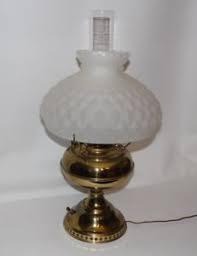
After the electricity-free night in my new childhood home, I asked for a paraffin lamp as my bedside lamp. Stepping back into my inner child’s shoes, I feel I was responsible enough to have one. Of course, the answer was no. The compromise was a fake paraffin lamp, with a fixed key I could pretend to turn to raise the light level and a removable bowl. I loved that lamp nevertheless.

***

My childhood lamp

***

My parents were very creative and resourceful, and this is the thread for my way of life. I decided to become an artist at the age of 12. Fast forward to 1977, at the age of 18 I spent a year doing an Art Foundation Course at Leicester Polytechnic. It was situated in a beautiful old school. My dad would take me early before anyone else got there so I had time to adjust my hair and my make-up. The course consisted of all kinds of art: life drawing, sculpture, oil painting, illustration, photography and textiles. I loved it and wanted a degree in all these subjects but I had to choose one subject. I chose Graphic Design, I think because that was the most likely to make money. My grandparents were from a poor mining background and that was still in my system.

***

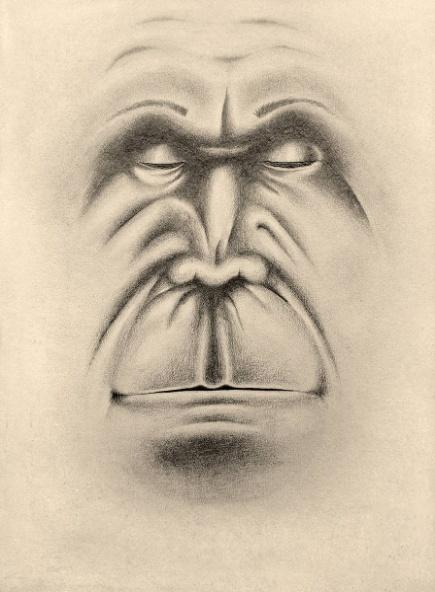
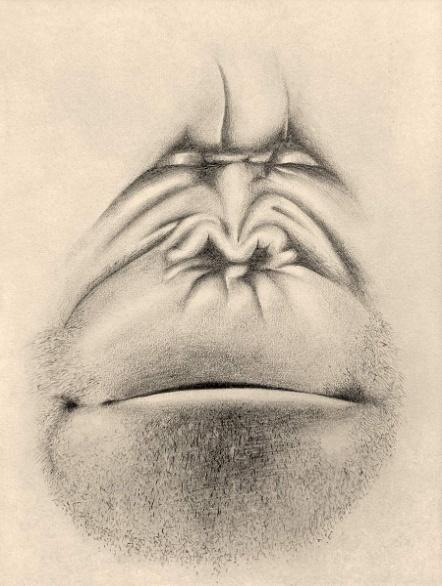
Metamorphosis, 1977

***

I left home in 1978 at aged 19 and went to St Martin’s School of Art in London and lived in Ralph West Hall of Residence for the first year, just beside Battersea Park. I loved the communal living. Although I had art as a meditation, I was on a destructive path of depression, drinking, smoking and experimenting with different types of drugs. I had been brought up in a household where, although I had many physical privileges, which I was grateful for, my mother had been in control of my life and on moving to London, I suddenly had complete freedom yet didn’t know who I was. I was trying to make sense of my world but was vulnerable and without boundaries. I was also extremely sensitive to noise and I didn’t realise this. Certain noises deeply triggered me, but at that time I didn’t know what they were. The drugs and alcohol numbed the fear. 

By Jules Smith